
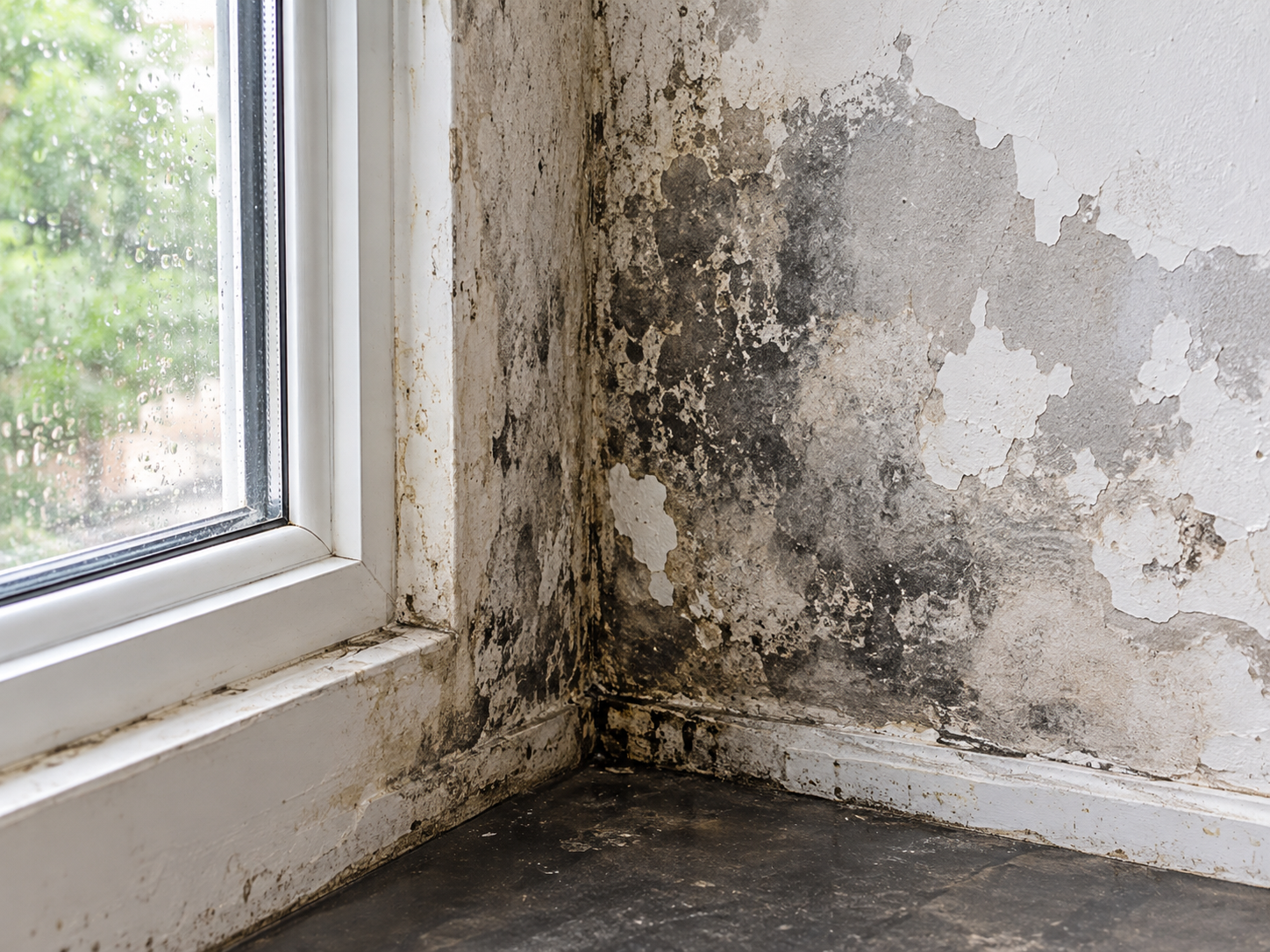
Water damage is stressful enough, and the fear of mold can make it even harder. The truth is that mold can start growing within 24 to 48 hours after things get wet. That short window is the reason quick action matters so much.
In this guide, you will learn how fast mold grows and what makes it grow faster. You will also see the warning signs that mold is already hiding in your home. Finally, you will get clear steps to protect your space and your health.
The Short Answer: Mold Can Start in 24-48 Hours
Mold spores float through indoor air all the time, and they are too small to see. They stay quiet until they land on something wet, such as carpet, wood, or drywall. Once moisture is present, they can begin to grow and spread.
According to the EPA, most wet items that dry out within 24 to 48 hours never develop mold. That is the one number worth remembering after a leak, a flood, or a burst pipe. Growth you cannot see may start first, and visible patches often show up later.
Mold Growth Timeline After Water Damage
In the first day, spores settle on wet surfaces and start to wake up. By day two or three, small colonies can form, and a musty smell may appear. These early stages are usually hard to see.
Between three and seven days, visible spots often show up on drywall, wood, and carpet. After one or two weeks, mold can spread deeper into materials and cost much more to fix. These times are rough estimates, since every home is different.
What Affects How Fast Mold Grows?
Several things decide how quickly mold takes hold after water damage. Some are about the water itself, and others are about your home. Knowing them helps you judge how urgent your situation is.
Moisture is the most important factor because mold cannot grow without it. Warm, still air also helps mold spread faster. Here are four key factors to check.
Moisture and Drying Time
The longer a material stays wet, the more likely mold is to grow on it. A small spill that dries fast is far safer than a soaked wall. Standing water that sits for days is the biggest risk of all.
Type of Material
Porous materials like drywall, carpet, and insulation soak up water and hold it deep inside. Mold can grow within them, which makes it very hard to remove. Hard surfaces like glass, metal, and tile are much easier to dry and clean.
Temperature and Airflow
Mold grows best in warm rooms, often near 77°F (25°C), but it can also grow in cooler spaces. Closed rooms with little airflow keep moisture trapped inside. Fans, dehumidifiers, and open windows help surfaces dry faster.
Type of Water
Clean water from a broken supply pipe is less risky than floodwater or sewage. Dirty water carries germs and plenty of food for mold, so it needs extra care. If the water was not clean, call a professional right away.
Signs Mold Is Already Growing
A musty or earthy smell is often the first clue. You may also see spots that are green, black, white, or orange. Remember that mold comes in many colors, not just black.
Look for peeling paint, warped walls, or bubbling surfaces that stay damp. Mold can also hide behind drywall, under carpet, or inside ceiling spaces. If you notice allergy-like symptoms at home, talk with a doctor.
What to Do in the First 24-48 Hours
First, stop the water source and make sure the area is safe to enter. Next, remove standing water and throw away soaked items like carpet padding and wet cushions. Take photos of everything before you clean, because your insurance company will want proof.
Then run fans and dehumidifiers, and open windows if the outdoor air is dry. Check hidden spots behind walls and under floors with a moisture meter. Keep drying until every surface feels completely dry to the touch.
When to Call a Professional
Call an expert like Spartan Restoration Inc. if the mold covers more than about 10 square feet, which is roughly a 3-foot by 3-foot patch. You should also call if the water was sewage or floodwater. Professionals have the tools to dry hidden spaces safely.
Get help if materials are still wet after 48 hours. People with asthma, allergies, or weak immune systems should avoid doing the cleanup themselves. A trained team of mold removal services in Long Island NY protects both your health and your home.
How to Prevent Mold After Water Damage
Dry everything fast and fix the root cause, such as a leaking pipe or roof. Keep indoor humidity between 30 and 50 percent for the best protection. A low-cost hygrometer can show you the number at any time.
Check the area again after one week and after two weeks. Watch for new smells, stains, or damp spots. Acting early is always cheaper than a big cleanup later.
Conclusion
Mold can begin growing within one to two days, so speed really matters. Dry the area quickly, and look in hidden places too. Small steps taken early can prevent big repairs later.
If you are unsure, ask a water damage or mold expert for an inspection. Do not wait for visible mold to appear before you act. Taking action today can protect your home and your family’s health.