Detecting a wasp in your house can be a terrifying experience. The wasp’s buzzing, its unpredictable flight, and the constant fear of being stung can easily create panic. For most of us, the first thought when we see a wasp is to kill it quickly. But has it ever crossed your mind what actually happens when you kill a wasp? In this article, we will explore what happens after you kill a wasp and safer alternatives to deal with it.
Dealing with an immediate wasp threat indoors
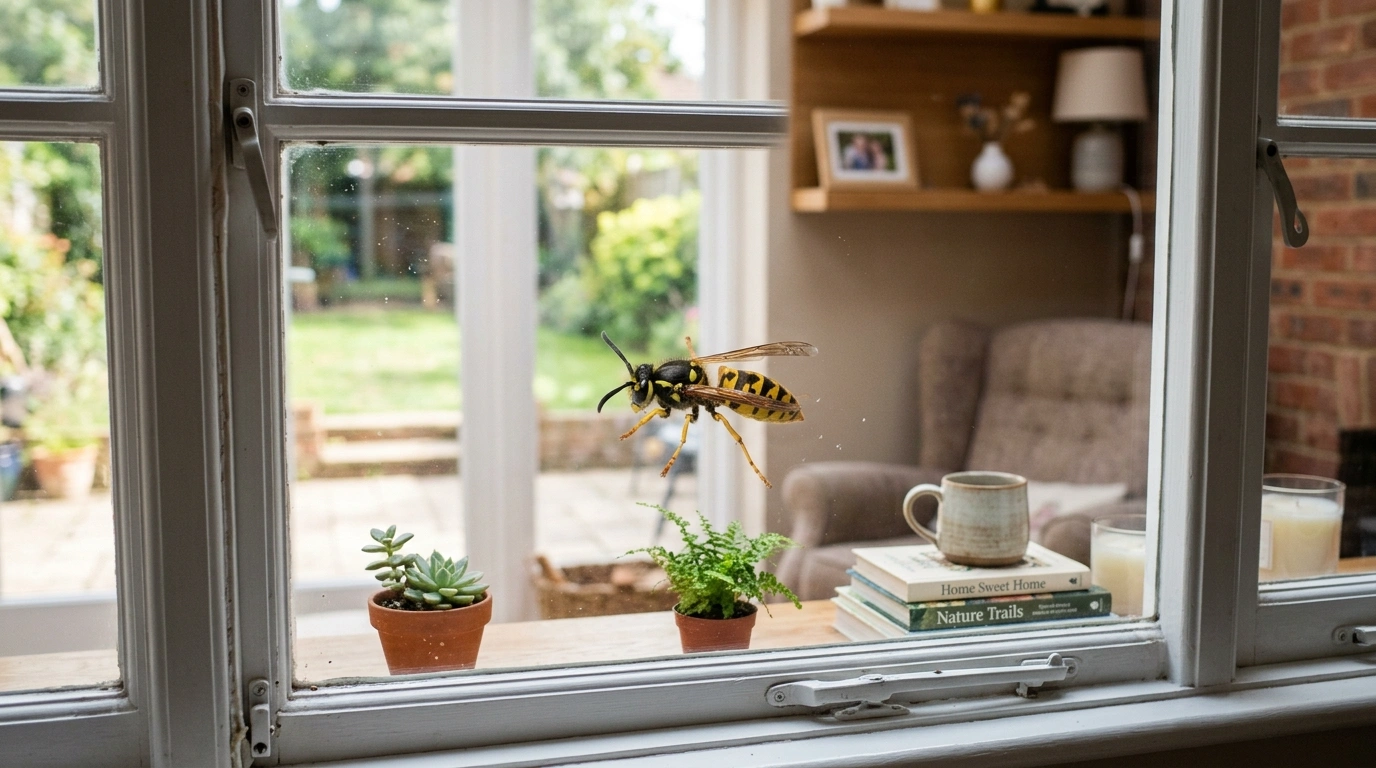
Killing a wasp in your home stops the immediate threat by preventing it from stinging you or flying into other living spaces. Although it does removes an immediate stinging threat, but it does not automatically attracts other wasps until and unless a nest is nearby or any other wasp is nearby.
How to get a wasp out of your house
When a wasp unexpectedly enters your home, the first reaction is usually unnecessary panic. The safest way is to stay calm and provide a clear way for the wasp to leave on its own. If you have any children or pets at home, keep them away.
1. Open doors leading outside
Try to avoid trapping the wasp, as it may feel threatened and sting. Instead, open the windows and doors leading outside, and dim your room lights so the exit looks brighter. The wasp will naturally fly towards the light and find its way away from your house.
2. Using a jar
If this doesn’t work and the wasp is sitting on a surface, you can place a jar over it and slide a piece of cardboard underneath so the wasp is in the jar. Now you can go outside and release it.
3. What one should avoid doing
Never try to catch the wasp with your bare hands, as you might get stung. Also avoid using insecticidal sprays unless necessary. If the wasps are regular visitors to your house, then check for a nest nearby. If you find one, don’t disturb it; instead, call a qualified professional.
Tip: Avoid swatting the wasp, as doing so will increase the chance of the wasp releasing pheromones, which could attract even more wasps into your home.
How to kill a wasp without getting stung
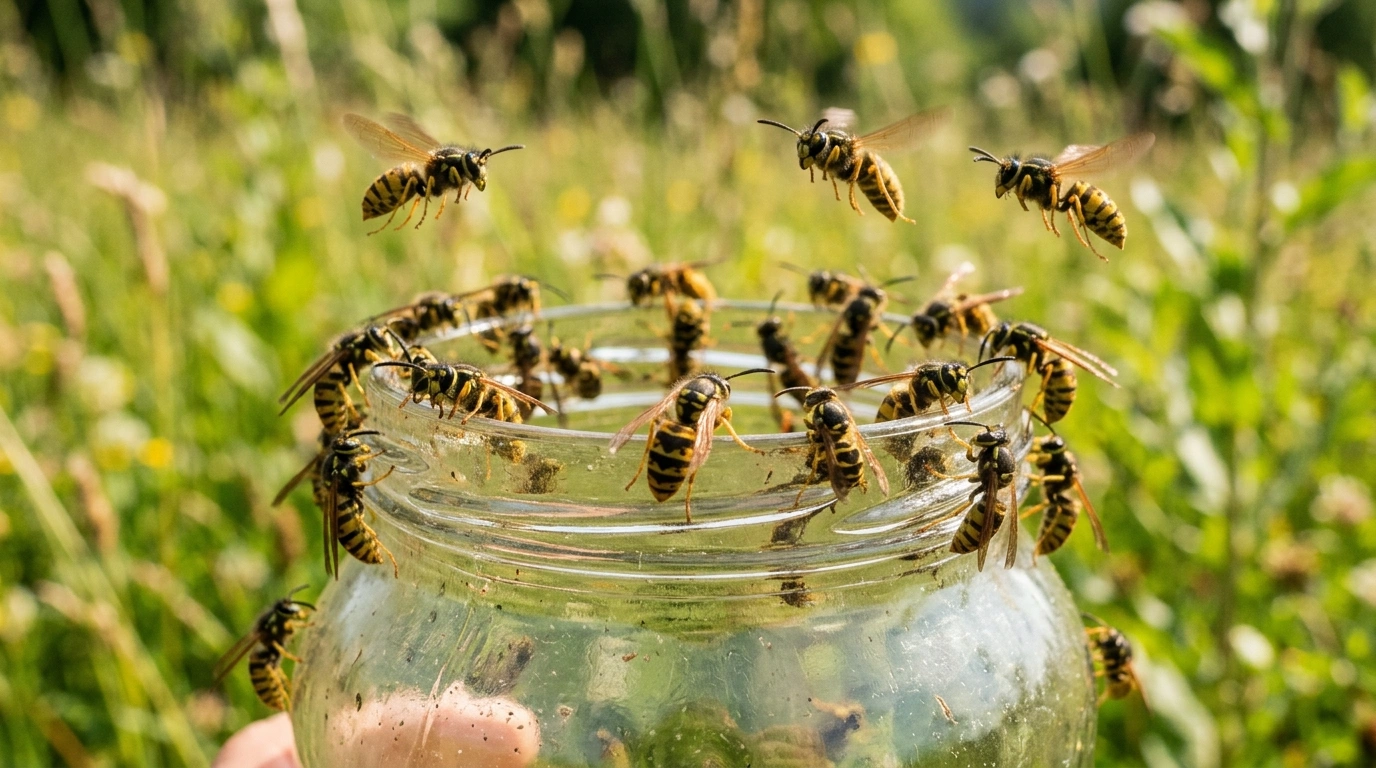
Killing a wasp should never be the first option. However, if you need to deal with it, you must take precautionary measures before getting close to the wasp to avoid getting stung.
- Close the doors leading to other rooms to stop the wasp from entering other parts of your house. Cover yourself fully by wearing long-sleeved shirts, trousers, and closed-toe shoes.
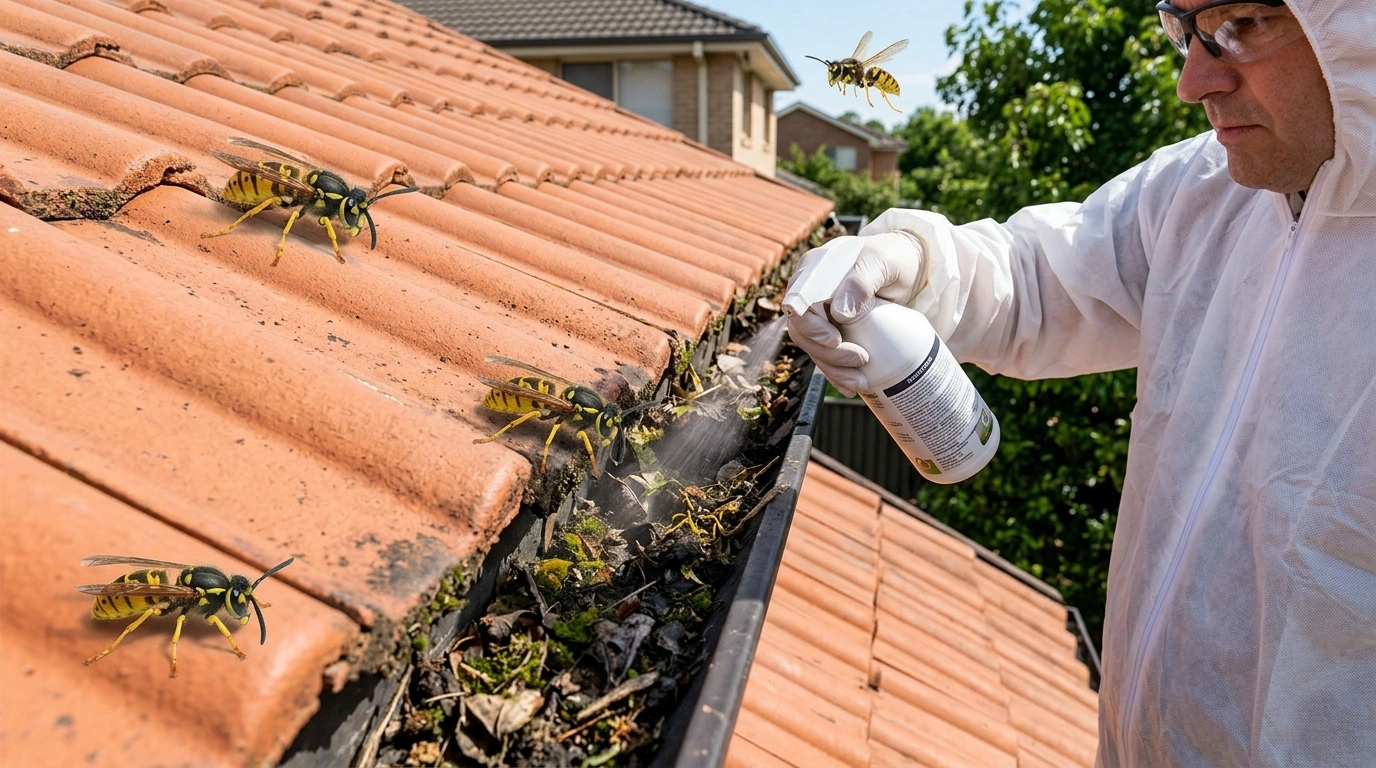
- You can use a wasp insecticide to kill a wasp and follow all the safety instructions written on it. Try not to spray the insecticide on food, people, or pets. After spraying the room, leave and re-enter only according to the instructions on the spray.
- Use the long attachment of the vacuum cleaner, as this will keep a safe distance between yourself and the wasp. Once you remove the wasp, empty the vacuum outside, preferably.
The most important thing you must remember is to avoid getting near the wasp unnecessarily. Try to stay calm, maintain a safe distance, and always use appropriate precautions. Following these rules greatly reduces your chances of getting stung.
Chemical and DIY methods to kill a wasp
When dealing with wasps, homeowners can choose different ways to eliminate them. You can use either chemical or homemade methods. The market offers several options. To help you, we’ve listed a few methods you can use to eliminate these nuisance insects.
Chemical wasp killers
Some commercial aerosol sprays containing active ingredients like pyrethrin and etofenprox are among the most useful and effective chemicals for killing wasps.
Aerosol contact sprays: These use gast acting synthetics to kill the pests and can work even from a distance of 20 feet.
Insecticide dusts: Dusts work well in places like cracks and crevices where sprays usually don’t reach.
Botanical sprays: This is an eco friendly option which uses plant derived essential oil and water combination to kill the wasps.
Homemade wasp killer
If a commercially available wasp killer isn’t for you, you can always opt for a homemade one. Let me guide you on how to make one at home.
Dish soap and water: The most commonly used homemade solution is a mixture of dish soap and water. The dish soap works when it directly coats the wasp’s body. It melts the protective waxy layer of the wasp’s skin, using it to dry out and also blocks the wasp’s breathing holes.
Sweet traps: For outdoor use, use a container and a sweet-smelling liquid to make a trap. Place the traps out of reach of pets and children.
Preventing measures to stop wasps entering your homes
The best way to deal with wasps is to stop them from entering your home or backyard in the first place. Here are some measures you can start practicing.
- Keep food items covered, especially sweet, sugary foods and drinks, as these can attract wasps.
- If you have a garden with fruit trees, always remove the fallen fruit as these can attract wasps.
- Always check for gaps in walls, windows, and doors and seal them, as these can be the places where wasps might thrive.
- Never disturb a wasp nest as this can trigger the wasps, and they might attack you when they feel threatened.
Tip: Never mix chemicals or household cleaners to make your own pesticide. Some chemicals may be flammable and can cause great damage.
Myths surrounding wasps
Wasps are social insects and can also communicate with other wasps using chemical substances known as pheromones. This is the reason why most people have the myth that when you kill a wasp, other wasps come storming at your house for revenge. Others believe that a dead wasp can somehow attract other wasps. These myths are not at all true as wasps can only communicate if they are near to each other. They also only warn other wasps to be alert and defensive of themselves and the nest.
Conclusion
Although it might be tempting to kill the wasp and get rid of it quickly in one go, you must always first try to get it out of your house because when wasps feel threatened, they are very likely to sting you. So to avoid this, killing the wasp should be your last option.
Frequently Asked Questions
If I kill a wasp in my house will more come?
No, not necessarily. When a wasp is killed, it may release chemicals that alert nearby wasps to the danger, but that doesn’t mean other wasps will come to your house for revenge or be attracted in any way.
What happens if you kill a wasp at night?
It is much safer to kill a wasp at night compared to during the day because wasps are less active at night, making them slow to react.
Can a dead wasp still sting you?
It’s best not to touch a recently dead wasp with your bare hands, as you might get stung by the stinger if you don’t handle it carefully..