If you’ve ever stood outside your house holding a handful of paint samples, you know how difficult choosing an exterior color can be. Gutters are no exception. A shade that looks almost identical to your trim on a color chart might be noticeably different once it runs the entire length of your roof.
A good starting point is deciding whether you want your gutters to disappear into the exterior or become part of the home’s design. From there, consider your roof color, fascia, siding, and even the amount of cleaning you’re willing to do.
Where you live can also influence your choice. In places like Nampa and Boise, Idaho, where summers are hot and dry, lighter dust can quickly become noticeable on dark gutters, even when they’re relatively new.
Start With the Parts of Your Home You Don’t Plan to Change
It’s tempting to choose a gutter color based on a house you saw online or a new exterior design trend. But before settling on a shade, think about the features of your home that will likely stay the same for the next ten years.
Your brickwork, stone accents, and roofing are good places to start. These are generally more expensive to change than shutters or exterior paint.
If you have brown architectural shingles, for example, a warm bronze gutter may look more natural than a cool charcoal one. Similarly, a house with cream siding might benefit from an almond-colored gutter rather than a bright white that makes the siding appear yellow.
Small differences in undertones become surprisingly noticeable across a long stretch of guttering.
Should Your Gutters Blend In or Stand Out?
Take a walk across the street and look back at your house. What draws your attention first? Is it the front porch, the windows, or the shape of the roof?
If you have a Craftsman-style home with decorative woodwork, matching the gutters to the fascia allows those architectural details to remain the focus.
On a single-story ranch home, dark gutters can create a strong horizontal line that emphasizes the width of the property. If that’s not the effect you’re after, a color closer to the fascia may be a better choice.
Black gutters can look beautiful on a modern farmhouse, but they may feel out of place on a traditional home with warm brickwork and brown roofing.
Think About What Your Gutters Will Look Like in Five Years
New gutters look clean regardless of their color. The more useful question is how they’ll look after several seasons outdoors. In areas like Nampa, Idaho, for example, gutters are exposed to prolonged summer sunshine, dry and dusty conditions, and winter rain and snow. These conditions can affect how noticeable fading, dirt buildup, and water stains become over time.
Different finishes make certain types of buildup more noticeable:
- White and ivory: Show dark streaks caused by dirt and roof runoff.
- Black and charcoal: Make light-colored dust, scratches, and dried water spots more visible.
- Sandstone, bronze, and taupe: Tend to disguise ordinary dust and minor surface imperfections.
If you live near agricultural land, an unpaved road, or ongoing residential construction, consider how frequently dust settles on your exterior.
Your Downspouts Don’t Have to Match Your Gutters
One detail that’s easy to miss when ordering gutters is where the downspouts will run.
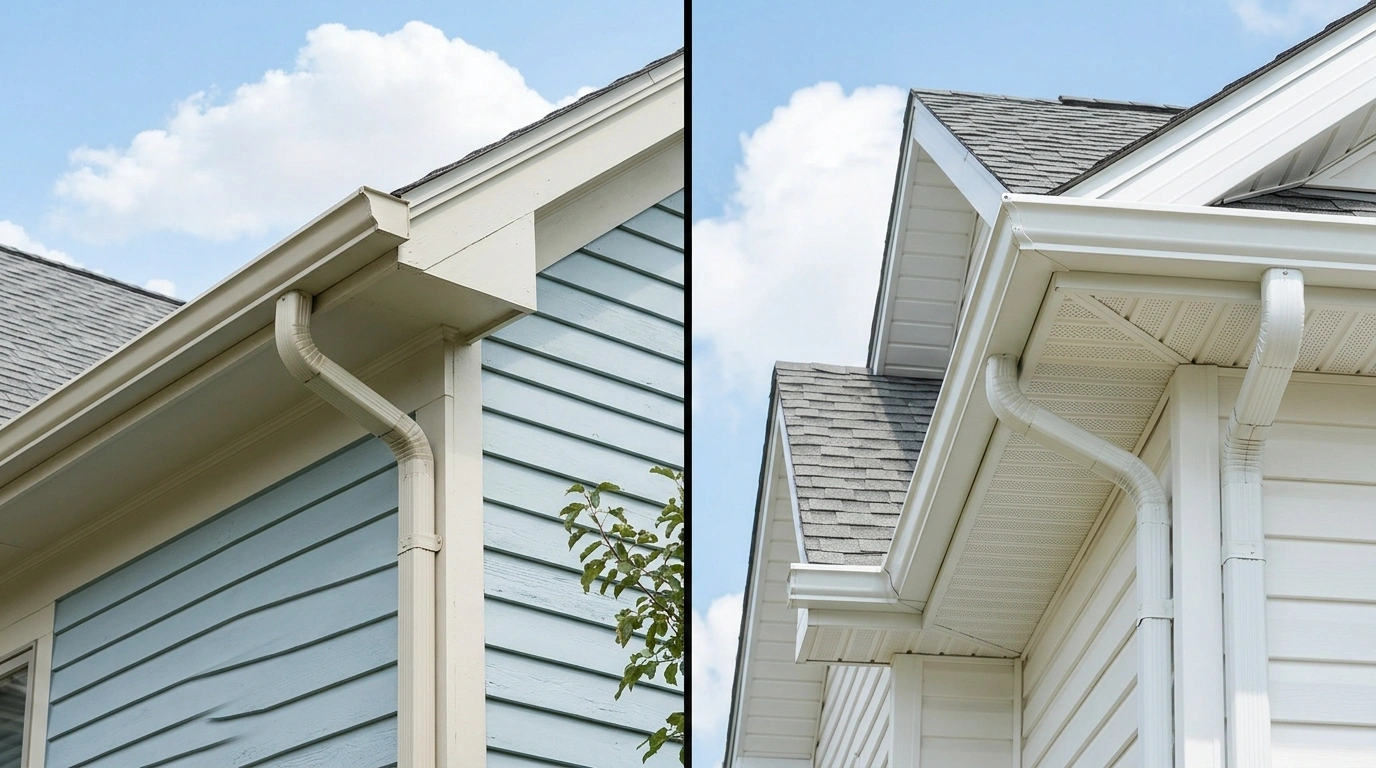
Imagine you’ve chosen dark bronze gutters to match your roof, but your house has light beige siding. Running bronze downspouts down either side of the garage could create two prominent vertical lines you hadn’t accounted for.
Choosing beige downspouts instead can help them blend into the walls while keeping the bronze finish along the roofline.
This is particularly useful on homes with multiple roof levels, attached garages, or several changes in siding material.
Consider the Gutter Style Alongside the Color
Color is only one part of how gutters will look on your home. Their shape, size, and placement can make just as much of a difference to the finished exterior.
K-style gutters have a decorative profile that resembles crown molding, making them a popular choice for traditional and contemporary homes. Half-round gutters have a softer appearance that often complements older homes, exposed brick, and more decorative architecture.
Before ordering new gutters, it’s worth discussing which combinations of profiles, materials, and finishes are available locally. A good installer should help you find a combination that suits your home’s exterior without compromising its ability to handle roof runoff.
If you’re considering gutter installation in Nampa, for example, Superior Gutter & Roofing is among the top local contractors, helping homeowners choose gutter systems that complement their home’s architecture and meet their drainage needs. With more than a decade of local experience, the company has completed over 7,000 projects in the Treasure Valley and holds a 4.9-star rating from 1,200+ Google reviews.
Choose a Color You’ll Be Happy With Beyond Today’s Trends
You don’t need to follow the latest exterior design trends to improve your home’s curb appeal. The most convincing gutter color is often one that makes the house look as though it was originally designed that way.
If you’re torn between two shades, consider which one will give you more flexibility when it’s time to repaint your siding or replace your roof.