
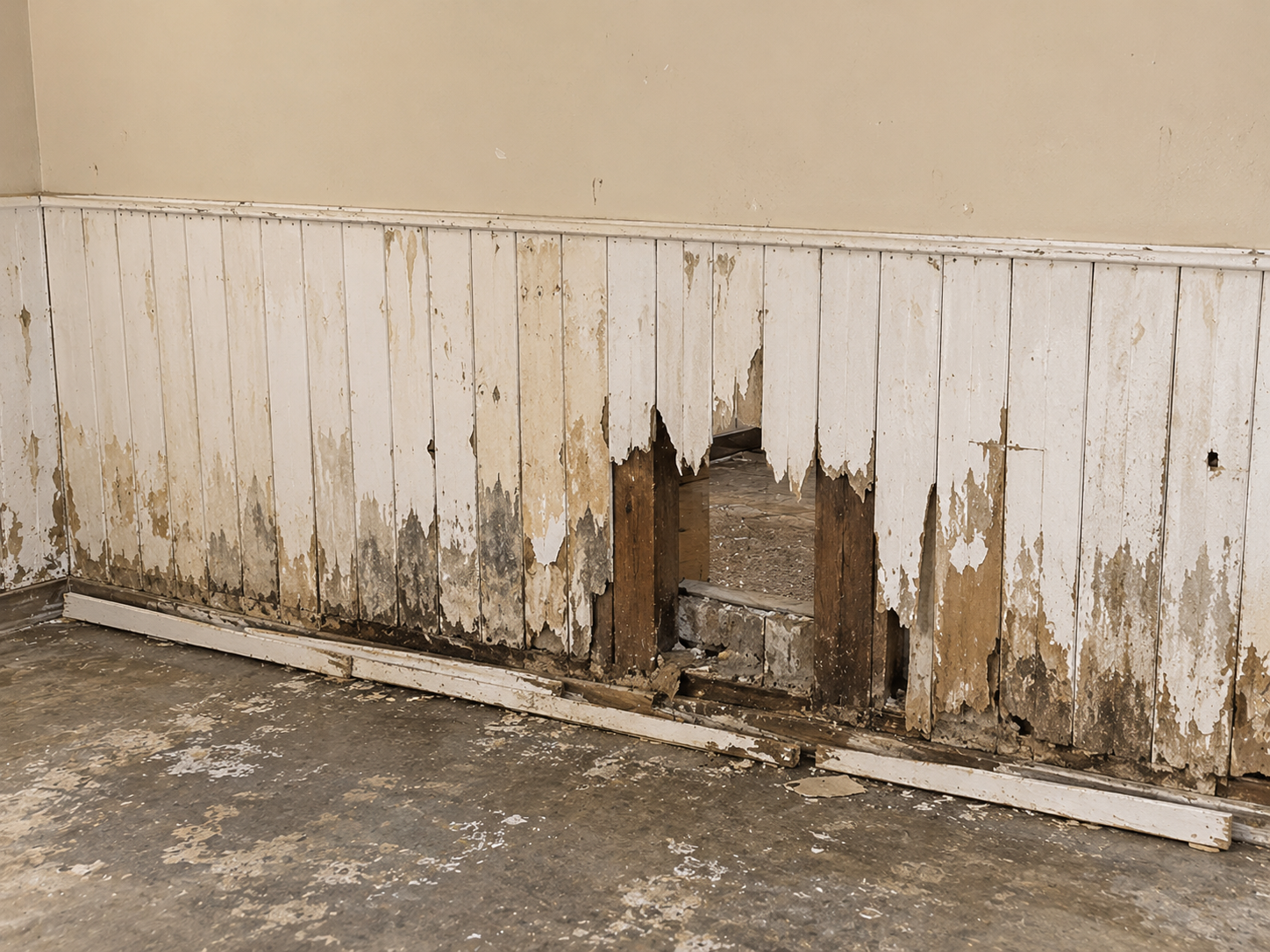
A finished basement can add useful living space, but covering damp walls or floors can hide a problem instead of solving it. Moisture may damage finishes over time, create musty odors, and leave you facing costly repairs after the room is complete.
Before choosing flooring, paint colors, or built-in storage, take time to understand how the basement handles moisture. A few checks now can help you plan the renovation around the actual condition of the space.
Look for Signs of Moisture Before Remodeling
Walk through the basement after dry weather and again after a storm. Look for water stains, peeling paint, white mineral deposits on masonry, rust on metal, or damp spots along the floor and walls. Notice any musty smell, too. A basement can have a moisture problem even when you don’t see standing water.
Check the corners, the area around windows, and the seam where the wall meets the floor. If the basement has been finished before, inspect behind accessible panels or inside utility areas. Look for warped trim, soft drywall, or damaged flooring.
Keep a simple record of what you find. Note where the signs appear and whether they change after rain or snowmelt. A recurring pattern can help you or a contractor narrow down the source.
Find the Cause Before Choosing Materials
Basement moisture can come from several places. Water may enter through a wall or floor, a plumbing line may be leaking, or humid air may be condensing on cool surfaces. Each cause calls for a different response.
Start with the easy checks. Look for dripping pipes, leaking appliances, and condensation around cold-water lines. Check that the gutters and downspouts carry roof water away from the house. Outside, look for areas where water collects beside the foundation or where the ground slopes toward the home.
These checks can reveal basic maintenance issues, but they won’t diagnose every problem. Water can travel through building materials before it becomes visible. If the same area gets damp repeatedly, don’t assume a coat of paint or a larger dehumidifier will fix it.
Don’t Use a Dehumidifier to Hide Active Water Entry
A dehumidifier can help control damp air, especially during warm, humid weather. It can’t stop water from entering through a crack, window, wall, or floor. If you dry the room without addressing the source, moisture may keep affecting the materials behind the finished surfaces.
Likewise, waterproof paint and surface coatings may not resolve the cause of recurring seepage. Before installing them, find out why the wall is getting wet and whether the product suits that condition.
If you’re unsure whether you’re seeing condensation or water intrusion, ask a qualified professional to inspect the space. It’s easier to plan a finished basement when you know what you’re dealing with.
Choose Basement Finishes With Moisture in Mind
Once you’ve addressed moisture concerns, select materials that suit a below-grade room. Carpet and traditional wood products can be vulnerable if water reaches them. Some homeowners prefer flooring designed to tolerate occasional dampness, but no finish should be treated as a substitute for fixing an active water problem.
Consider how you’ll use the room. A playroom, office, guest room, and laundry area have different needs. Leave access to plumbing shutoffs, cleanouts, sump pits, and other equipment. Avoid building permanent cabinets or walls that block areas you may need to inspect or service later.
Before adding insulation or closing in masonry walls, confirm that the walls are dry and that your planned assembly fits local requirements. Basement construction details vary by home and climate, so a contractor familiar with below-grade spaces can help you choose an appropriate approach.
Plan for Drainage and Equipment Access
If the basement has a sump pump, leave room to inspect and maintain it. Make sure you can reach the pit, test the pump, and check the discharge line without moving furniture or removing finished panels.
Think about what would happen if the pump lost power or stopped working. Depending on the home and existing system, a backup may be worth discussing with a professional. Keep electrical equipment and stored belongings away from areas that have flooded before.
Also consider how you’ll notice a problem once the basement is finished. Access panels near plumbing or mechanical equipment can make future checks easier. A small amount of planning can prevent a minor repair from turning into a major demolition job.
Get an Assessment Before Work Begins
If you find recurring dampness, staining, or seepage, get the basement assessed before you cover the walls or install new flooring. A professional can help identify whether the problem relates to drainage, groundwater, plumbing, or another source and explain possible next steps.
Homeowners in New Jersey who need help evaluating basement moisture can contact Blue Umbrella Waterproofing. A professional assessment can help you understand the condition of the space before you commit to a finished-basement project.
Make the Basement Ready Before You Finish It
A successful basement renovation starts with the space behind the future walls and floors. Look for warning signs, track when moisture appears, and address the cause before choosing finishes. Then plan the layout so you can still reach equipment and inspect areas that matter.
Taking these steps won’t guarantee that a basement will never have a moisture issue. It will give you a clearer picture of the space and help you make renovation decisions with fewer surprises.