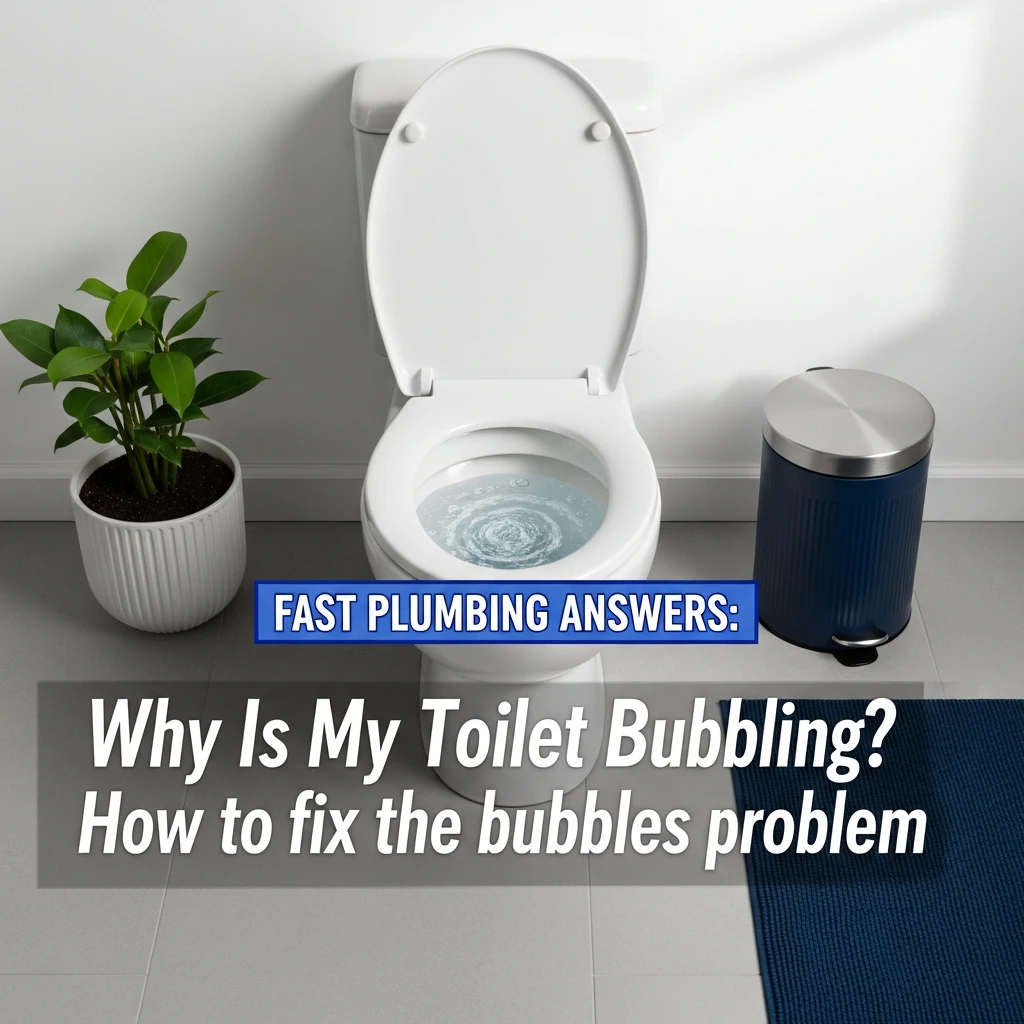
Every time you flush your upstairs toilet, you see bubbles in the downstairs toilet. It is no coincidence. Your toilet bubbles are trying to guide you to a specific problem in your home’s plumbing. It may seem alarming, but it’s actually good that you see the bubbles because they will help you locate the problem in your pipeline, and the timing of the bubbles also indicates the size of the problem. This happens because the two toilet systems share the same pipeline. Consider this a specific sign of a specific problem. Most commonly, a partial blockage is the cause of these bubbles.
What is actually happening inside your pipes?
All the pipelines in your home are connected to a single sewer line that runs to the street. Whenever you see bubbles, it means there is a blockage somewhere in your sewer line. When you flush, a rush of water travels to the blockage, where air is trapped. Water cannot travel freely, so it hits and compresses the air already present, which makes the air seek the easiest possible exit from the pipeline. And what is the easiest pipeline available to the air for exit? The pipeline on the same floor is the easiest path, which is why you see air exiting as bubbles from the pipeline downstairs.
The main reasons for bubbling in the toilet and blockage in the house drains are:
1. Blocked Main Sewer Line
A blockage in the sewer line connecting the home’s pipelines to the municipal sewer is one of the most common causes. When th e sewer pipe is blocked, no flush, shower, or load of laundry has anywhere to go. The main reasons for this blockage are roots growing through the tiny cracks, and other causes include grease build-up, debris accumulation, collapsed pipe, or years of flushing non-flushable items.
2. Blocked Vent Stack
A vent pipe is something every home has that helps air from the drain pass, allowing the water to flow freely. The vent pipe runs through the drain all the way to the roof. Sometimes ice, leaves, or a bird’s nest can block it, causing negative pressure that can lead to bubbles in your toilet. When the vent is blocked, the system pulls air from wherever it can- usually back through the toilet.
3. Blocked Branch Drain Line
Branch drain lines are small pipes that connect the individual fixtures in your bathroom, toilet, sink, and shower before joining them to the main sewer line. Over time, when no precautions or attention are given, grease, soap scum, hair, or debris can restrict the flow of water through them, pushing the air back through the toilet rather than letting it pass.
4. DIY Plumbing mistakes
A toilet, drainline, or pipeline installed without proper ventilation can cause the same type of bubbles as any of the other reasons. So, if the bubbles in your toilet started after the renovation, you have one obvious reason for them.
5. Exiting blockage exposed by Rain
You may have a small crack or leakage that may not be detectable or show symptoms during dry weather, but when rain falls, the saturated soil puts pressure on buried municipal systems, which are not designed to withstand the additional pressure from already moist soil that can’t handle more water. This physical pressure decreases the diameter of pipes. So, rain is just a test that exposes a hidden issue.
6. Tree root intrusion
Even a hairline crack can attract roots as it releases warm water onto the surrounding soil, which nearby roots detect and grow straight into the pipe. Once the root has entered the pipeline through these cracks, it expands with branches, catches debris, and causes a blockage.
Diagnose the cause of toilet bubbling based on different plumbing situations?
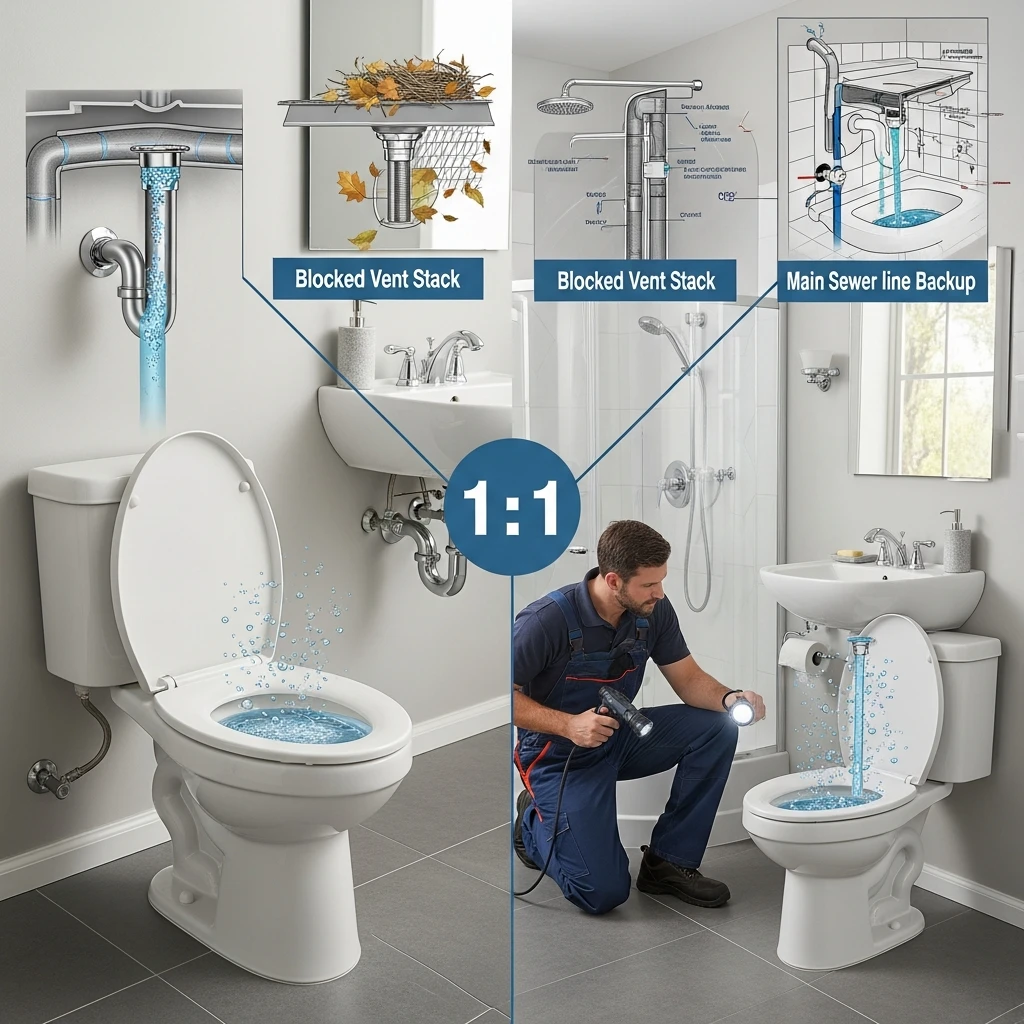
1. Bubbles in the downstairs toilet when the upstairs toilet is flushed
The blockage is in the main sewer line, which connects both pipes. Clog sits in the shared section.
2. Multiple drains in the house are bubbling at the same time
When multiple drains are bubbling, the problem is in the sewer line and is severe, so contact a plumber immediately to avoid water damage or health hazards. This is the time to turn off the water and contact a plumber.
3. The toilet bubbles when the sink and washing machines are drained
If your toilet is bubbling when the sink is drain then most likely both share the same drain, and the problem lies in the local branch line or vent pipe blockage. These fixtures share a vent or drainage path. When water drains rapidly, it creates negative pressure in the pipe. If the vent is clogged or undersized, air is pulled through the toilet trap rather than entering the vent, resulting in bubbles.
How to fix the bubbles problem?
Bubbles when only the upstairs toilet is flushed
- Step 1: Stop using both toilets
- Step 2: Auger the main sewer cleanout directly
- Step 3: If the bubble stops, the clog is cleared.
- Step 4: If not, call a plumber for a camera inspection for the exact location of the clog
Bubbles when the shower bath drains
- Step 1: Stop using the shower immediately
- Step 2: Remove the shower drain cover
- Step 3: Insert a drain snake and clear hair, soap scum, and buildup
- Step 4: Run the shower if the toilet bubbling stops
- Step 5: If the bubbling continues, blockage is deeper in the branch line and requires professional help.
Multiple drains are bubbling at the same time
- Step 1: Stop using all water immediately
- Step 2:Do not attempt a DIY Fix.
- Step 3: Locate the sewer cleanout and open the cap to relieve the pressure
- Step 4: Call the plumber immediately
Tree Root Intrusion
- Step 1: Call a plumber to inspect the root in the pipes
- Step 2: The plumber will use a mechanical auger to cut through the roots
- Step 3: Hydrojetting removes the remaining roots from pipes
- Step 4: If roots have collapsed a section of pipe, then section replacement is required
Blocked Septic Tank
- Step: Check when the septic tank was last pumped. If it has been over 3 years, then it is your first call.
- Step 2: Call a septic professional.
- Step 3: Full tank pump takes approx 60 minutes.
- Step 4: After pumping, check whether the bubbles have disappeared.
- Step 5: If bubbles are still present, septic professionals will assess whether the case drain is saturated.
Blocked Vent Stack
- Step 1: Go to the roof and locate the vent pipe above the bathroom
- Step 2: Check for any visible debris, bird’s nest or leaves
- Step 3: Flush the vent from the top with a garden hose or similar device.
- Step 4: If water still backs up, the clog is deeper.
- Step 5: Feed a plumbing snake into the pipe to break through it. If you are not okay with this step, this is the right time to call a plumber, as the clog is deeper.
DIY Plumbing Mistake
- Step 1: Confirm that the bubbling started right after the renovation, new toilet installation, or DIY work.
- Step 2: Stop using the newly installed fixture
- Step 3: Call a plumber to check the installation and whether the vent system is properly sized
- Step 4: The plumber will correct any missing or incorrectly sized vent connections so air can flow properly again.
Existing blockage exposed by Rain
- Step 1: Temporarily stop using water in the home during rain.
- Step 2: Check 24 hours after the rain to see if bubbling stops or persists.
- Step 3: Check if neighbors are facing the same issue, and if so, call the Municipal water authority, not the plumber.
- Step 4: If only you are experiencing this issue, not your neighbors, then rain has exposed an existing blockage, so you should now call a plumber.
Why is my Toilet bubbling when the shower is running?
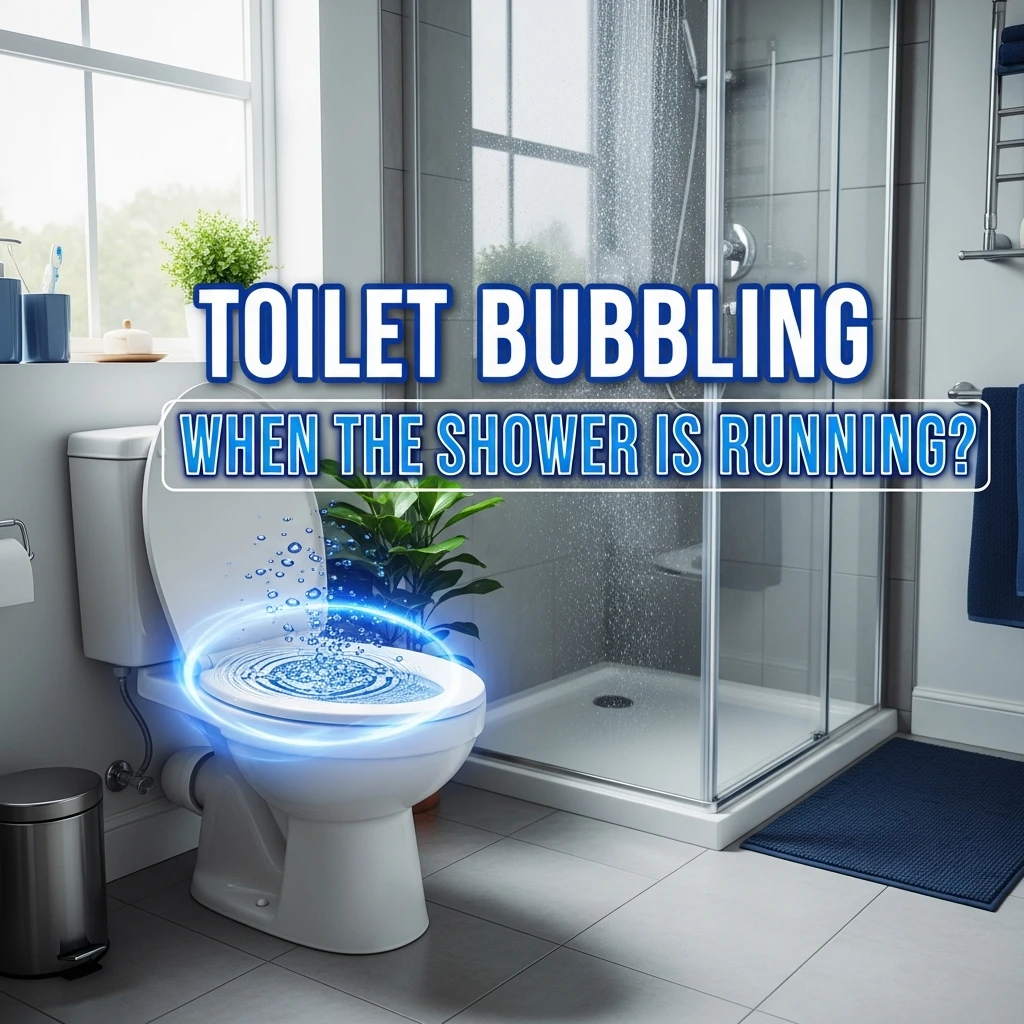
If you drain the shower and see bubbles in your toilet, then the problem is in the shared drain line. When shower water travels through a blockage and hits it, it pushes the air towards the toilet. Bubbling during the shower means the clog is in the branch line.
How do I stop my ground-floor toilet from bubbling when the upstairs toilet is flushed?
A bubbling in the downstairs toilet when the upstairs is flushed is due to a clog in the main sewer line. The first step is to stop using both toilets and avoid using any other water fixtures until this is fixed. Use a sewer auger through the main cleanout to clear the blockage. If the bubbling stops, the clog is gone; if not, call a plumber.
Signs of a Plumbing Emergency
If your Sewage smell is coming into the home, waste from drains is somehow backing up into the house, and multiple fixtures are backing up at the same time. In this situation, skip the option to do it yourself and call professionals immediately.
How to avoid the toilet bubble issue in the toilet?
To avoid clogging your toilet or drains, never flush anything other than toilet paper and human waste. Religiously perform the inspection of the sewer in line 2-3 years, and the septic tank should be pumped every 3-5 years.
Long-term consequences of ignoring a bubbling toilet
When you see bubbles in your toilet, fix the issue as soon as possible; otherwise, if left unresolved, the pressure builds up in the upstream pipes, which can cause leaks at pipe joints. Leaking water causes damage inside walls, mould, growth, and structural damage. So, it’s suggested not to avoid the issue for more than 1-2 days.
Frequently Asked Questions
Is a bubbling toilet dangerous?
Not immediately, but advised not to ignore beyond a day or two. Signals blockages in sewer lines
Can I fix bubbling myself?
One single plunge with the right one is worth trying before calling a plumber in case the clog is not deep.
How to get rid of air in pipes when flushing a toilet?
Open all the faucets at home, from the highest to the lowest, hot and cold, then slowly turn the main water valve back on. Water refilling the pipes pushes the trapped air back.