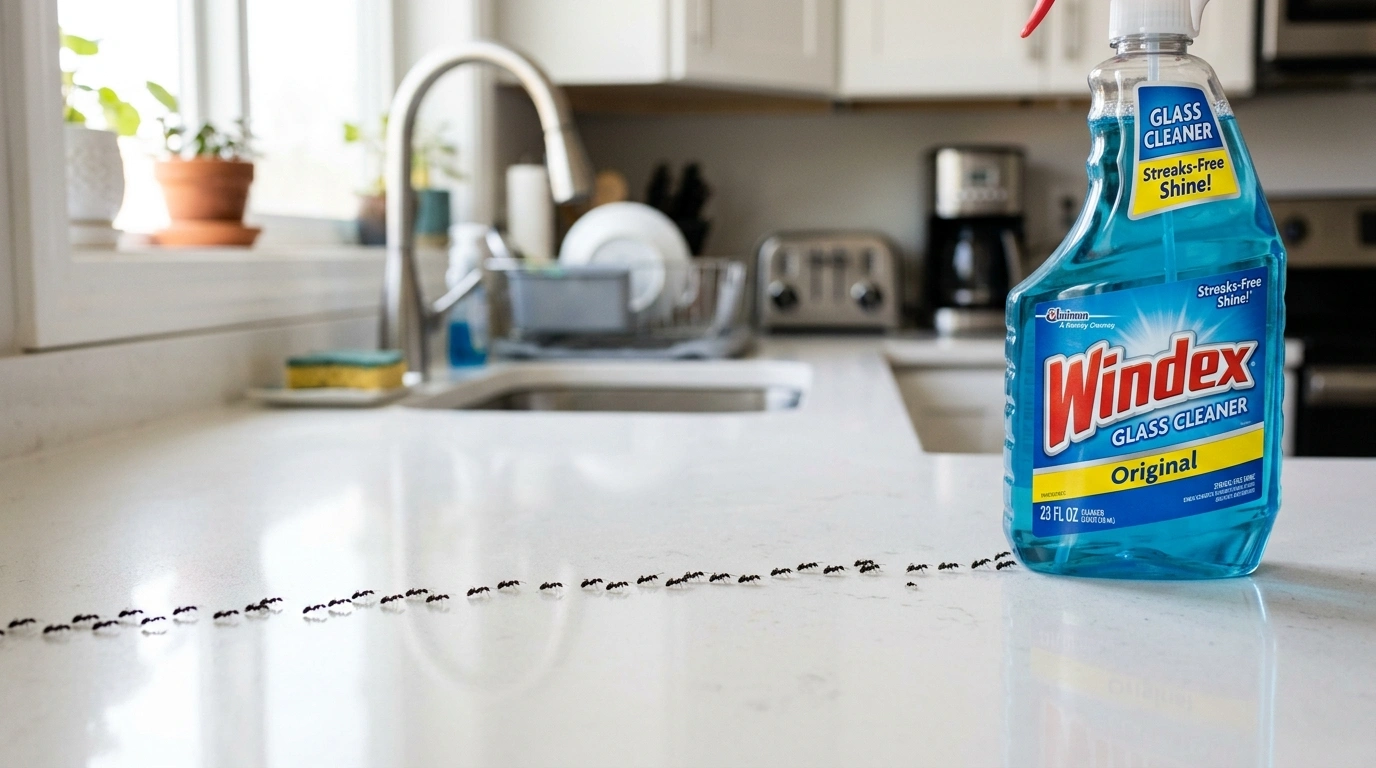
One of the most frustrating problems that people face is ants crawling around in their homes. Ants are attracted to food spills, sweet and sugary foods, and pet food. One of the most effective and safe options to get rid of ants is Windex, a surface cleaner. Homeowners prefer Windex because it is cost-effective and easy to use. In this article, we will explain what Windex is and whether it really helps kill ants. We will also list alternatives you can choose and safety precautions you must follow while using Windex.
What is Windex?
Windex is a popular blue glass and surface cleaner. It is not designed to kill ants or insects. Windex contains cleaning agents used to remove dirt, grease, and stains from glass and other surfaces. Windex contains ammonia, surfactants,, and other cleaning ingredients that can disrupt an ant’s respiratory system.
Tip: Windex contains ammonia and surfactants, which can be harmful if ingested or comes in direct contact with the eyes. So, keep Windex out of reach of children and pets to avoid severe allergic reactions.
Windex as an ant killer: how does it work on ants?
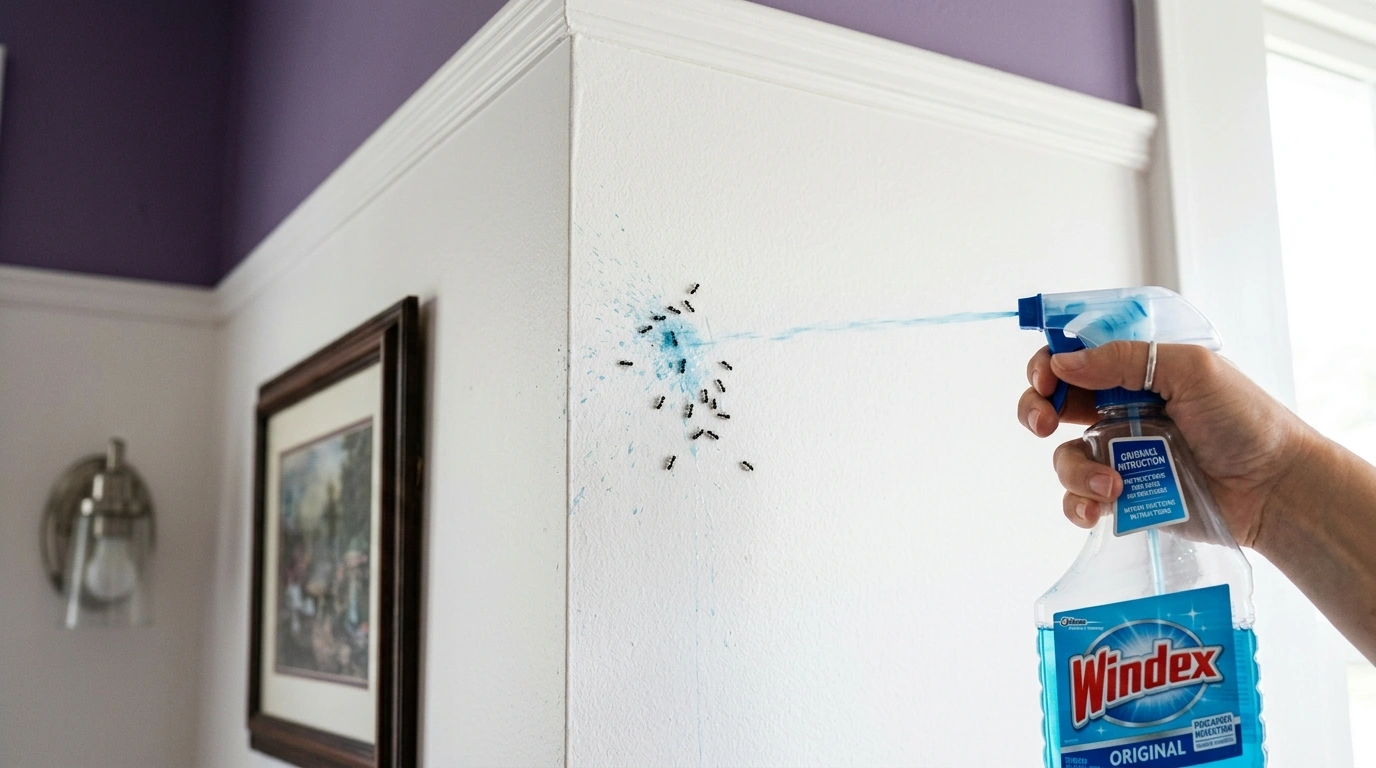
Windex is not designed to kill ants, but when you spray it directly on ants, it can kill them. If the ant is coated completely with Windex, the liquid interferes with the normal functioning of the ant’s body. After contact, ants may slow down or eventually die, depending on the amount of Windex sprayed and the type and concentration of Windex.
Ants are members of the phylum Arthropoda, and they have a waxy layer on their bodies that helps reduce water loss. When Windex is sprayed on an ant’s body, it breaks down the protective waxy layer. It can also enter the body through spiracles, or respiratory pores, and affect the respiratory system. The exact effect of Windex on the ant depends on the type, concentration, and duration of exposure. Direct exposure to Windex can kill ants, but it is not recommended to rely on Windex as an insecticide.
Can you get rid of an Ant Infestation using Windex?
The simple answer to this is no. The biggest limitation of Windex against ants is that it cannot help you get rid of an ant infestation. This is because Windex can only kill the ant you spray directly, but the colony will remain safe. Usually, the ants you find crawling around in your house are just a small part of the colony. The ants that follow the same trail will emerge from their nest and come to your home. Hence, killing a few members of the colony does not ensure that you rid yourself of the rest of the ants.
How to use Windex?
Spray a small amount of Windex on ants from a short distance. After the ants die, clean the area with a wet towel. Avoid using Windex in large amounts, especially near the kitchen or dining area.
Always follow the instructions on the label for your safety. Avoid spraying it near food, utensils, or cooking areas. Do not breathe it or let it contact your eyes or skin, as the ammonia in Windex can cause severe allergic reactions. Also avoid spraying it on plants and clothes unless the label says it is safe.
Pros and cons of using Windex
Windex is a quick fix against individual ants, but it is not a long-term solution for killing ants.
Pros
- Windex provides an instant solution against ants as it blocks the spiracles, causing death.
- Windex is very budget-friendly. It serves the dual purpose of cleaning and killing ants.
Cons
- Windex is not an insecticide. It is not formulated or tested to kill ants or control ant infestation.
- It is not long-lasting. Once you wipe the area or the solution dries, it provides no protection.
Alternatives to Windex for killing ants
Ant baits
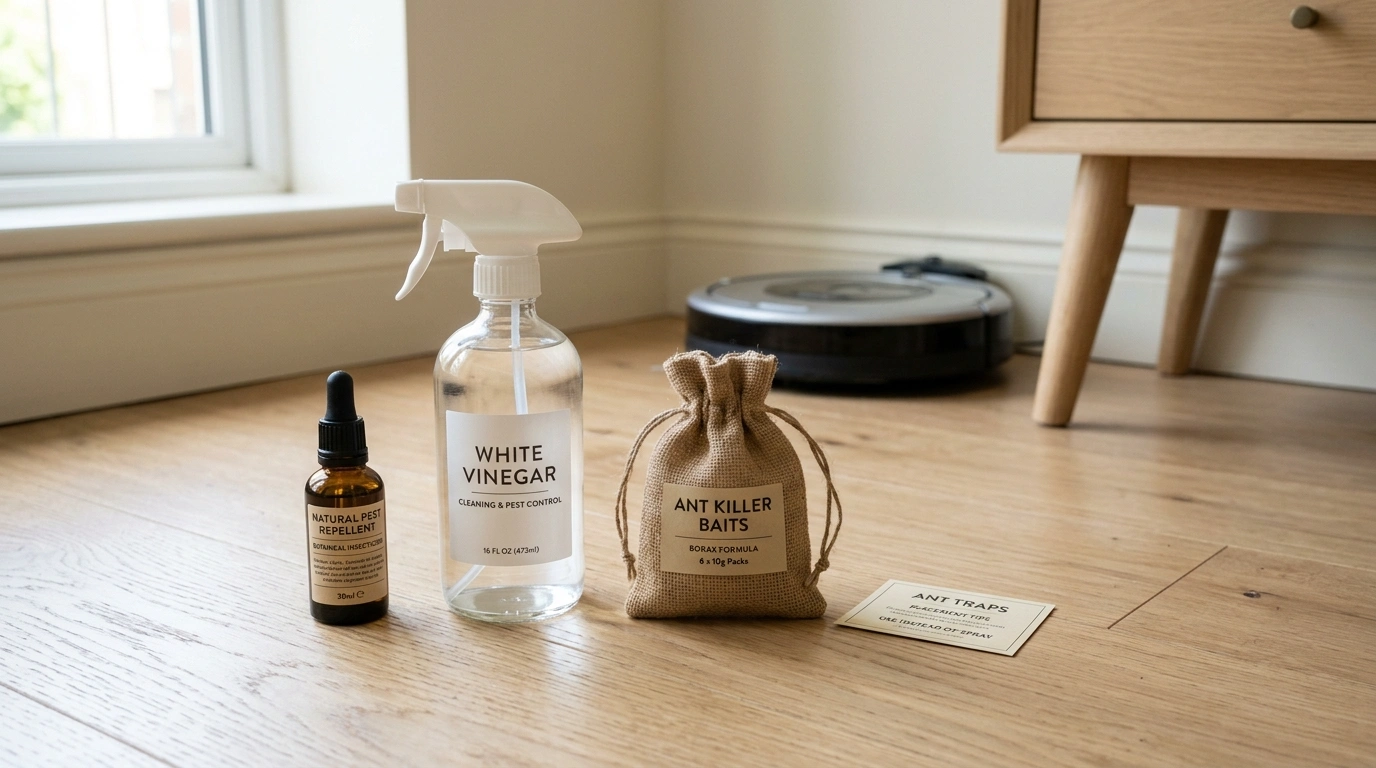
Ants carry these baits to their colony, where the bait is shared with other ants. Depending upon the active ingredients present in the baits, it can be useful to get rid of even those ants that you don’t see. Don’t forget to read and follow the instructions and precautions in the manual.
Insecticides
These are specially formulated and tested to kill or control ants. Some products are specifically designed for a particular species of ant. Always use them according to the manual’s instructions.
White vinegar
A combination of white vinegar and water spray is the best DIY alternative to Windex, as it also wipes out the scent trails of ants.
Tips and tricks to keep ants away
If you find ants crawling around your house, first identify what is attracting them. They are attracted to sugar and sweets, food crumbs, grease residues, pet food, and accessible garbage. To stop the ants from entering your house, follow these steps.
- Clean the kitchen countertops and floors well. Store sugary foods in airtight containers.
- Empty garbage bins regularly, and remember to clean spills as soon as possible.
- Seal the entry points and hiding spots of ants. Small cracks in the walls are often entry points for ants.
- Check around doors, windows, pipes, cracks in walls, and areas beneath the sink. If you find any gaps, seal them immediately with an appropriate household sealant.
- To get rid of ants completely, you must kill the queen using a poisonous bait. Mix 1 part borax with 3 parts sugar and warm water to make the bait.
Conclusion
Although Windex is effective against ants, it can only kill the visible ones. It does not affect other members of the colony. So, use Windex as an instant solution, not a long-term ant-control option. Don’t forget to read the manual and use Windex accordingly. For large ant infestations, contact a professional for pest control solutions.
Frequently asked questions
Does Windex repel ants?
Windex is not an ant repellent. However, Windex can remove food residues and pheromone trail which can temporarily make the area less appealing to ants.
How long does Windex take to kill ants?
Windex kills ants almost immediately. It is an instant fix to kill visible ants by suffocating them.
How does Windex stop other ants from coming to your home?
Windex wipes out ants’ scent trails, which prevents other ants from following and coming to the exact spot.