Did you spot something small and brown skittering across your bedroom floor at 2 a.m.? Is it a cockroach? A bed bug? Your first instinct might be to grab the nearest shoe, but getting the identification right matters more than most people realize. Cockroach treatments do nothing for bedbugs, and bedbug protocols won’t touch a roach infestation. Misidentify the pest, and you’ve wasted time, money, and peace of mind. While the real problem keeps growing constantly.
Let’s deep dive into a straight breakdown of what sets these two apart, where each one hides, what draws them in, and how to deal with them before things spiral out of control.
They Don’t Actually Look That Much Alike
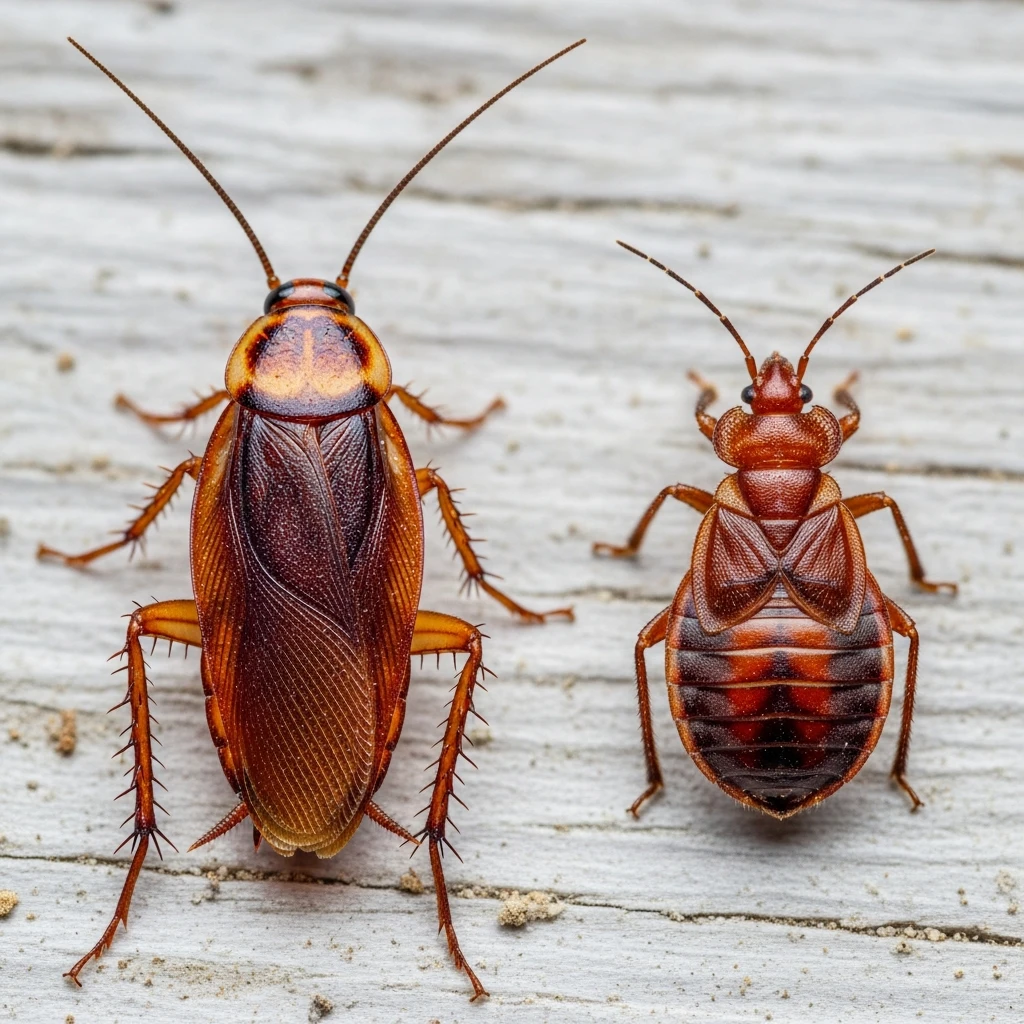
It really isn’t hard to tell a cockroach apart from a bedbug once you know what to look for. Even if both are reddish-brown and flat. The confusion arises in low light or when people spot a nymph rather than a full adult.
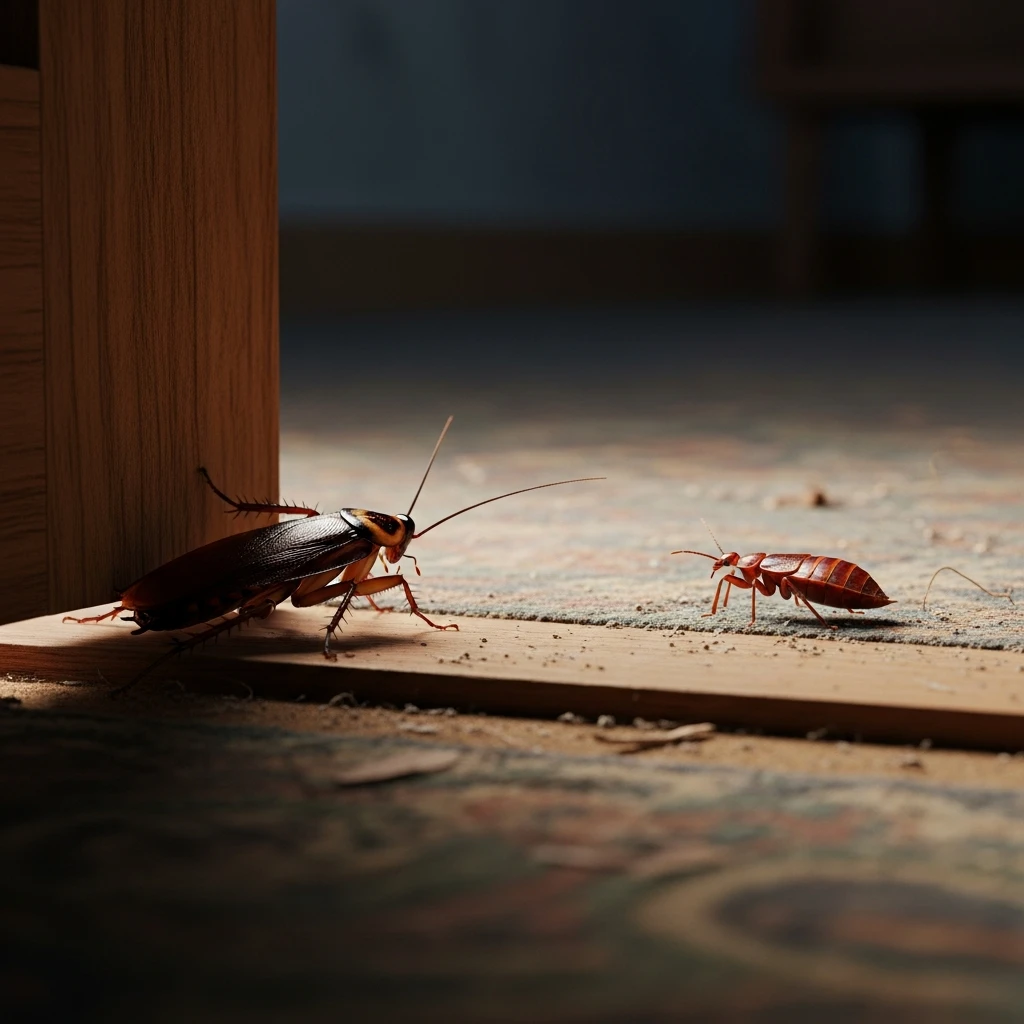
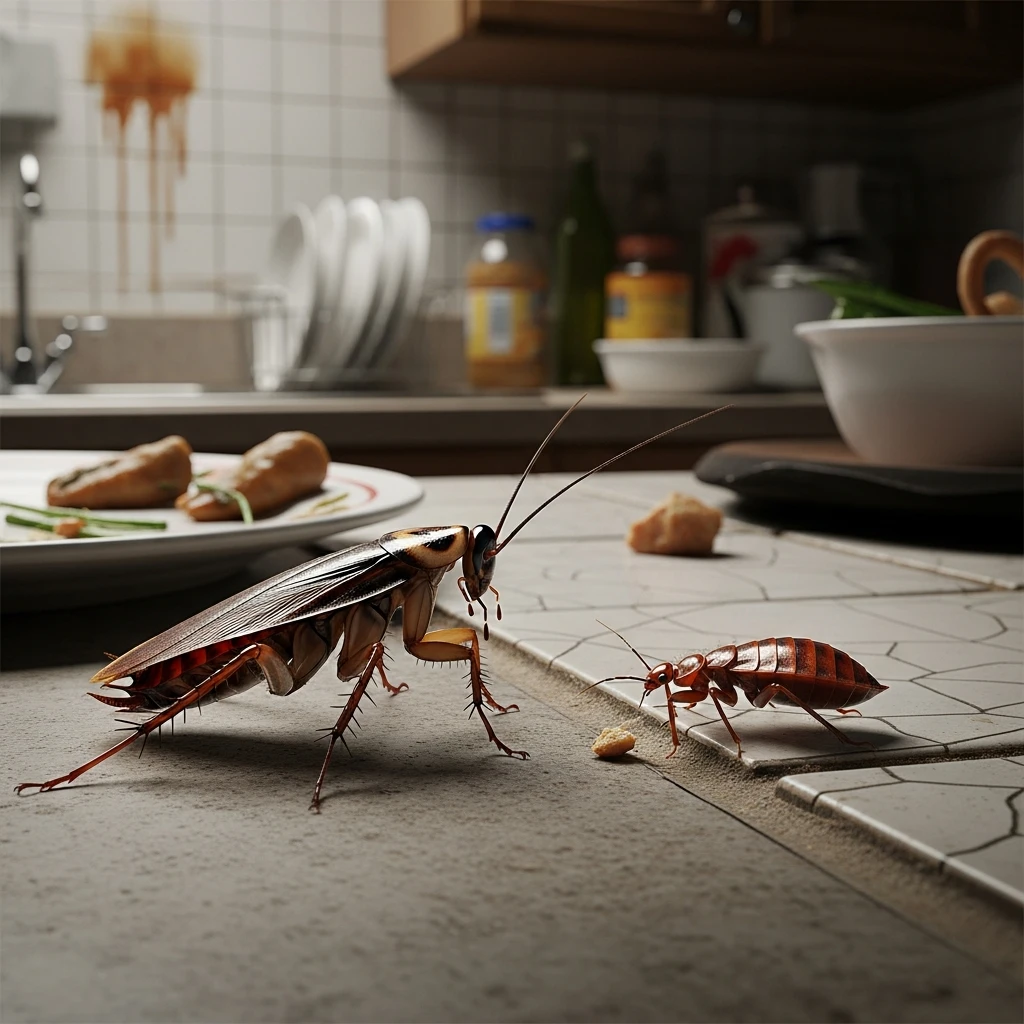
Bed bugs are small, roughly 4-5 millimeters long. They have a flat, oval body with no wings, which means they can not fly or jump. They usually tend to darken after feeding, shifting from a pale tan brown to a deeper reddish brown. They move deliberately and slowly, hence easy to miss. They hide themselves during the day and come out at night, generally when the room is quiet, and people are still sleeping for a while.
Cockroaches are a different story entirely. When it comes to size, even the smallest roaches at home are roughly the same length as a full-grown bed bug- about a quarter inch. But the most common species, like the American cockroach, can stretch up to two full inches. They have long, distinctive antennae, spiny legs, and a more cylindrical body shape than the oval shape of a bed bug. What they all share is the speed. Roaches move fast, scatter when disturbed, and vanish into cracks within seconds.
Where Each One Sets Up Camp
Where you find the pest is often more telling than what it looks like.
Bed bugs stay close to their food source: you. They nest in mattress seams, box spring corners, the gap behind your headboards, the hinges of picture frames, sofa seams, carpet edges near the bed, and cracks in bed frames. They’re not attracted to food scraps or a dirty kitchen. They’re drawn to warmth, carbon dioxide, and the rhythm of a sleeping human. A five-star room can harbor them just as easily as a roadside motel.
Cockroaches are drawn to damp, dark environments, such as the cabinet under the sink, behind the refrigerator, inside walls near plumbing, and in basement corners. Unlike bed bugs, they’re omnivores. Food debris, cardboard, grease, and soap residue are all fair game. A warm appliance, like a microwave, can become a nesting ground if the conditions are right.
The thumb rule is that a pest in the kitchen or bathroom moves fast. A pest near your bed leaves itchy bites on exposed skin. Then you’ve got bed bugs.
How do they get in?
Bed bugs hitchhike. They don’t walk in from outside; they arrive on luggage, secondhand clothing, used furniture, and the bags of houseguests. A thrift store sofa, a used mattress, or a hotel stay—any of these can introduce them into a previously clean home. After any trip, inspect your luggage before it enters the bedroom and wash all travel clothes on high heat, worn or not.
Cockroaches exploit gaps. Cracks around pipes, gaps in window frames. Open drains, even grocery bags. They’re attracted to leaking faucets and standing water, which is why rainy seasons often push them indoors. German cockroaches, in particular, are frequently brought in on secondhand appliances and electronics.
The Warning Signs Each Pest Leaves Behind
Signs of bed bugs:
- Small, itchy red welts in clusters or a line on arms, neck, shoulders, or wherever skin is exposed during sleep.
- Tiny blood spots on pillowcases or sheets from a bug being crushed in the night.
- Dark smear spots on mattress seams or nearby baseboards and liquid droppings, because bed bugs survive entirely on blood.
- Shed skins, pale papery exoskeletons left behind as nymphs grow
- A faint, sweet, musty odor that sharpens as the infestation grows.
Signs of Cockroaches:
- Oval dark droppings, larger and more solid than bedbug marks
- Ootheca, a small, ribbed egg case resembling a kidney bean, containing 10 to 40 nymphs
- Grease smear marks along baseboards near nesting areas
- A musty, oily smell concentrated in areas where they congregate
- A single roach spotted during the day, almost always a sign the hidden population has grown too crowded.
What Each Pest Eats and Why It Matters?
Bed bugs feed exclusively on blood. A single feeding lasts up to ten minutes, after which the bug retreats back into hiding. They’re not known to transmit disease the way mosquitoes do, but their bites cause real discomfort in the form of red, itchy welts that can get infected if scratched, and in some people, serious allergic reactions.
The psychological toll is just as real; sleeping in an infested space causes anxiety and disrupted sleep that lingers long after treatment.
Cockroaches are scavengers, and they don’t bite humans. What makes them dangerous is the bacteria they carry and spread across surfaces, like Salmonella, E. coli, and even Cholera. Their shed skin fragments also become airborne, triggering asthma-like reactions, particularly in children. If roaches are reaching your kitchen counters or pantry, the risk of getting contaminated is very high.
Which One Is Harder to Get Rid Of?
Both are genuinely difficult, but bedbugs sit in a different category of stubborn.
Cockroaches are bigger, easier to spot, and will take bait traps, which gives you more options. They can still survive up to a month without food and reproduce quickly, but commercial products can make real progress when used correctly.
Bed bugs resist many common pesticides, can survive up to a year in an empty room without feeding, and hide in spots sprays never reach. The most effective approach is professional heat treatment combined with targeted chemical application covering all life stages. The earlier you catch them, the lower the cost and the faster the resolution.
For both pests, a monthly three-minute sweep with a flashlight, checking mattress seams, cabinet bases, and the area under appliances, can catch problems long before they become expensive.
Conclusion
Knowing which pest you’re dealing with is the first step toward solving the problem. Both are resilient, capable of causing real harm, and stubborn enough to survive a half-hearted response. The cockroach contaminates. The bed bug steals your sleep and your peace of mind.
Either way, get the identification right, act fast, and don’t wait for the problem to announce itself loudly.
Frequently Asked Questions
Can both pests infest the same home at once?
Yes, the two infestations are completely independent. Having one doesn’t attract or repel the other, and each requires its own treatment approach.
Why are bedbug bites mistaken for cockroach bites ?
Because cockroaches almost never bite humans. Waking up with bite marks points to bed bugs, fleas, or mosquitoes, not roaches.
Can I handle a bed bug infestation myself?
Store-bought sprays can temporarily suppress or reduce a small population, but they rarely eliminate one. Bed bugs hide where sprays don’t reach, and many strains have developed pesticide resistance. Professional heat treatment is the most reliable fix once the infestation is established.
Are cockroaches only attracted to dirty homes?
No. Moisture is often a bigger draw than food. A leaky pipe under the sink will attract roaches regardless of how clean the rest of the kitchen is.
How fast can bed bugs multiply?
A single female can lay up to 500 eggs in her lifetime, with each egg hatching in around ten days. A small introduction can become a full infestation within a few months, which is exactly why catching them early is so important.