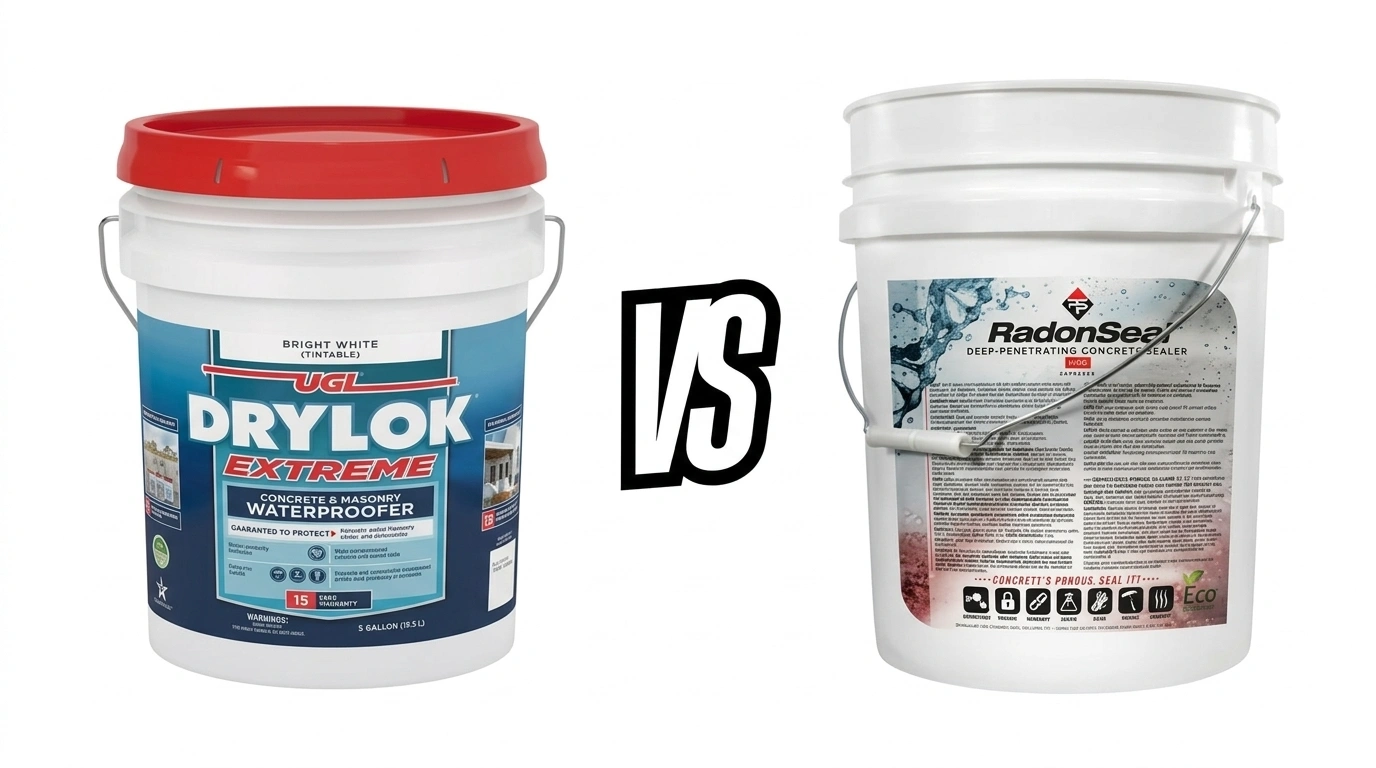
Drylok and RadonSeal both protect concrete from moisture. But they work differently, Drylok creates a waterproof coating on concrete and masonry walls. RadonSeal penetrates porous concrete, sealing its pores and capillaries from within. In short, choose Drylok for a painted, finished look, and choose RadonSeal to keep the natural look of unpainted concrete.
If you are planning to waterproof your basement walls, this guide will help you understand the difference between Drylok and RadonSeal so you can make a better decision.
Characteristics of Drylok and RadonSeal
Here are some characteristics of both products that explain how they work and where they can be used.
Drylok
Drylok is a masonry waterproofing product that creates a protective coating over concrete and masonry surfaces. It is available in different formulations, including Drylok Original and Drylok Extreme.
Some characteristics of Drylok:
- It creates a waterproof coating on concrete and masonry walls.
- It can be used on interior and exterior masonry surfaces, including below-grade walls.
- It resists water pressure up to 15 PSI.
- It provides a white, paint-like finish that can be tinted.
- You can apply it with a brush, roller, or suitable sprayer.
- It requires at least two coats for the intended waterproofing performance.
These characteristics make Drylok a good option for homeowners who want to protect their basement walls and give them a clean, finished appearance.
RadonSeal
RadonSeal is a penetrating concrete sealer that works differently from conventional waterproofing paints. Instead of forming a surface coating, it penetrates concrete and reacts within its pores and capillaries.
Here are some of the characteristics of RadonSeal:
- It penetrates porous concrete to help seal its pores and capillaries.
- It helps restrict the movement of water, moisture vapor, and radon gas through concrete.
- It strengthens and hardens the treated concrete surface.
- It helps reduce efflorescence, a white mineral deposit on concrete.
- It does not leave a conventional paint-like coating.
- It works best on suitable, unpainted concrete surfaces.
RadonSeal is a suitable option for those who want to protect their concrete without changing its natural appearance.
Drylok Vs RadonSeal: What Are The Main Differences?
Although both products protect concrete from moisture, they apply differently and work in different ways.
| Feature | Drylok | RadonSeal |
|---|---|---|
| Product type | Surface-applied waterproofer | Penetrating concrete sealer |
| How it works | Creates a protective coating | Seals pores and capillaries from within |
| Appearance | White, paint-like finish | Maintains the natural concrete appearance |
| Application | Brush, roller, or sprayer | Typically applied using a sprayer |
| Best suited for | Waterproofing with a finished appearance | Treating suitable porous concrete |
| Radon protection | Helps reduce radon penetration | Helps restrict radon movement through concrete |
The main difference is that Drylok protects the surface, while RadonSeal works inside the concrete. Your choice should depend on your basement walls’ condition and the type of moisture problem you are trying to address.
Which is Better For Basement Waterproofing?
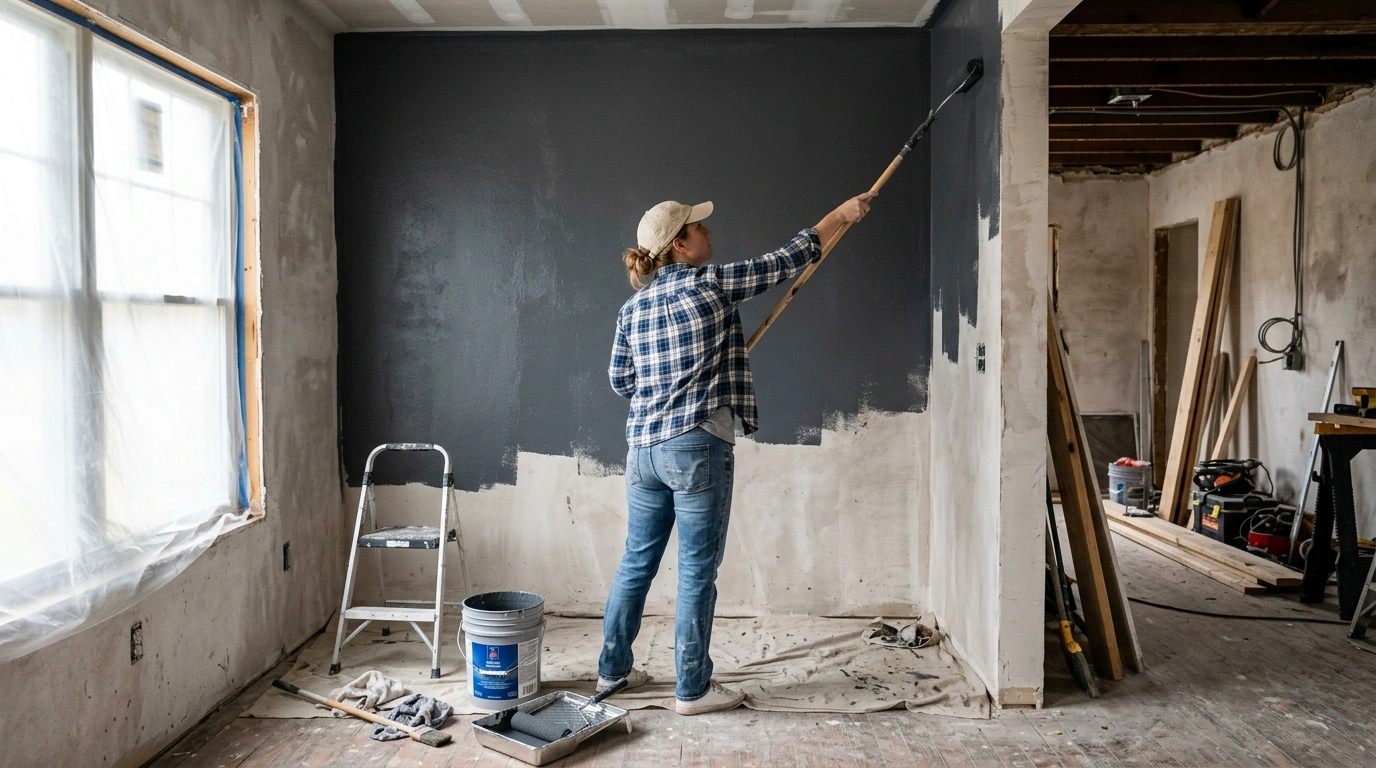
Both products help protect concrete against moisture. However, their effectiveness depends on the surface condition and the source of the water.
Drylok For Basement Walls
Drylok creates a protective coating that helps prevent water from passing through concrete and masonry walls.
If your basement walls have minor moisture problems and you want a painted finish, Drylok can be a practical choice. Its application is similar to painting, which makes it convenient for many DIY projects.
However, you must prepare the surface properly before application. Loose paint, dirt, and other contaminants can affect the coating’s adhesion. Active leaks and persistent water pressure may also require additional waterproofing measures. If you’re also wondering whether a rubber sealant can handle a leaking crack, see our guide on Drylok vs Flex Seal to learn where each product works and where it doesn’t.
RadonSeal For Concrete Protection
RadonSeal penetrates porous concrete and helps seal pathways within the material. It also strengthens the treated surface and reduces moisture movement.
This makes it suitable for homeowners who want to protect unfinished basement walls without applying a conventional coating. However, RadonSeal needs direct access to suitable concrete. If the surface is already painted or sealed, the product may not penetrate as intended.
If water is entering through significant cracks or persistent leaks, address the source first.
So, if you want a protective coating with a painted appearance, consider Drylok. If you want to seal porous concrete from within while keeping its natural appearance, RadonSeal may be a better fit.
Which Product is Better For Radon Protection?
Radon is a naturally occurring radioactive gas that can enter a home through openings and porous areas in its foundation. Because you can’t see or smell it, you must test for radon to determine whether your home has elevated levels.
Both products can help to reduce radon penetration. However, RadonSeal is specifically designed to seal concrete pores and capillaries that radon and other soil gases can move through. Drylok also lists radon gas reduction among its benefits, although its primary function is masonry waterproofing.
If Radon is your main concern, RadonSeal might be worth considering for suitable concrete surfaces. However, neither product should replace a radon mitigation system when one is needed. Always test your basement and consult a professional to effectively address elevated radon levels.
Radonseal vs Drylok: Application Tips
The application process is another factor to consider when comparing Drylok and RadonSeal.
Applying Drylok
Here are some quick application tips for Drylok:
- Start by removing dirt, loose paint, and other contaminants from the surface.
- Repair cracks and damaged areas using suitable repair materials.
- Ensure the surface meets the manufacturer’s preparation requirements.
- Apply the first coat evenly using a brush, roller, or a suitable sprayer.
- Allow the first coat to dry as directed by the product instructions.
- Apply the second coat to achieve the intended waterproofing performance.
Always follow the manufacturer’s instructions for coverage, drying time, and application conditions.
Applying RadonSeal
RadonSeal requires a different approach because it needs to penetrate the concrete rather than form a coating over it.
Here are some application tips:
- Remove dirt, paint, and existing sealers that prevent penetration.
- Check that the concrete is suitable for treatment.
- Apply the product evenly using an appropriate sprayer.
- Allow the concrete to absorb the sealer as directed.
- Follow the manufacturer’s application instructions.
- Allow the treated surface to dry and cure as specified before applying other finishes.
If your basement walls are already painted, you might need to remove the coating before considering RadonSeal.
Can You Use Drylok and RadonSeal Together?
Using both products might be a viable option if you want to combine deep concrete sealing with a surface-applied waterproofing coating.
Apply RadonSeal first to suitable, unpainted concrete once the surface meets the manufacturer’s recoat requirements. Drylok might be applied over it.
However, check product compatibility and preparation requirements before starting the project. Also remember that applying both products might not fix problems caused by poor drainage, foundation issues, cracks, or water accumulation around your home.
Conclusion
Choosing between Drylok and RadonSeal depends on your waterproofing needs. Drylok creates a protective coating over concrete and masonry walls, making it a practical option if you want moisture protection with a painted finish.RadonSeal, on the other hand, penetrates the concrete and seals its pores and capillaries from within.
If you want to keep the natural look of concrete while protecting it from moisture and radon gas, RadonSeal may be a good choice. However, if you prefer a waterproof coating that also gives the wall a finished appearance, Drylok might be a better choice for your space.
Frequently Asked Questions
Can Drylok stop basement leaks?
When applied properly, Drylok can help prevent water from passing through masonry. However, active leaks, structural cracks, or hydrostatic pressure may require additional waterproofing measures.
Can RadonSeal stop water leaks?
RadonSeal can help seal porous concrete against moisture penetration, but it is not intended to bridge active cracks or stop significant flowing water leaks.
Can I use RadonSeal and Drylok together?
You may use them together in some applications. However, it is best to check manufacturer instructions for surface preparation and compatibility.
Can Drylok stop water under pressure?
Drylok products can resist water pressure when applied correctly. However, severe hydrostatic pressure or ongoing leaks may require exterior drainage or other waterproofing solutions.