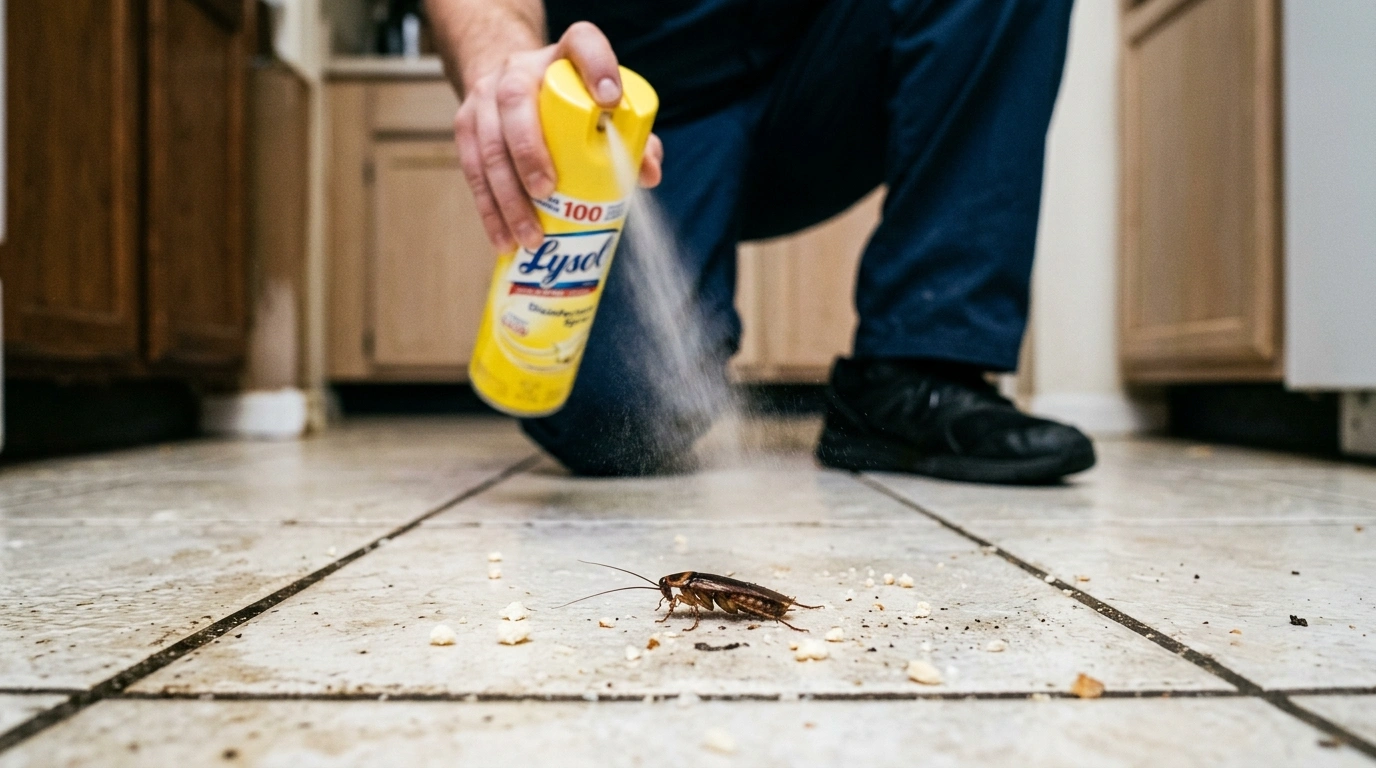
Seeing a cockroach in your kitchen is enough to make most people reach for whatever spray is already sitting nearby. That means Lysol, as it is a disinfectant, is already in the cupboard, and if spraying it makes the roach stop moving. It is easy to assume the problem is solved.
So, before you empty half a can of disinfectant chasing the next roach, here is what actually happens when Lysol hits a cockroach, what it can and cannot do, and which methods are more effective when there is more than one roach involved.
Can Lysol kill roaches? What nobody tells you before you start spraying.
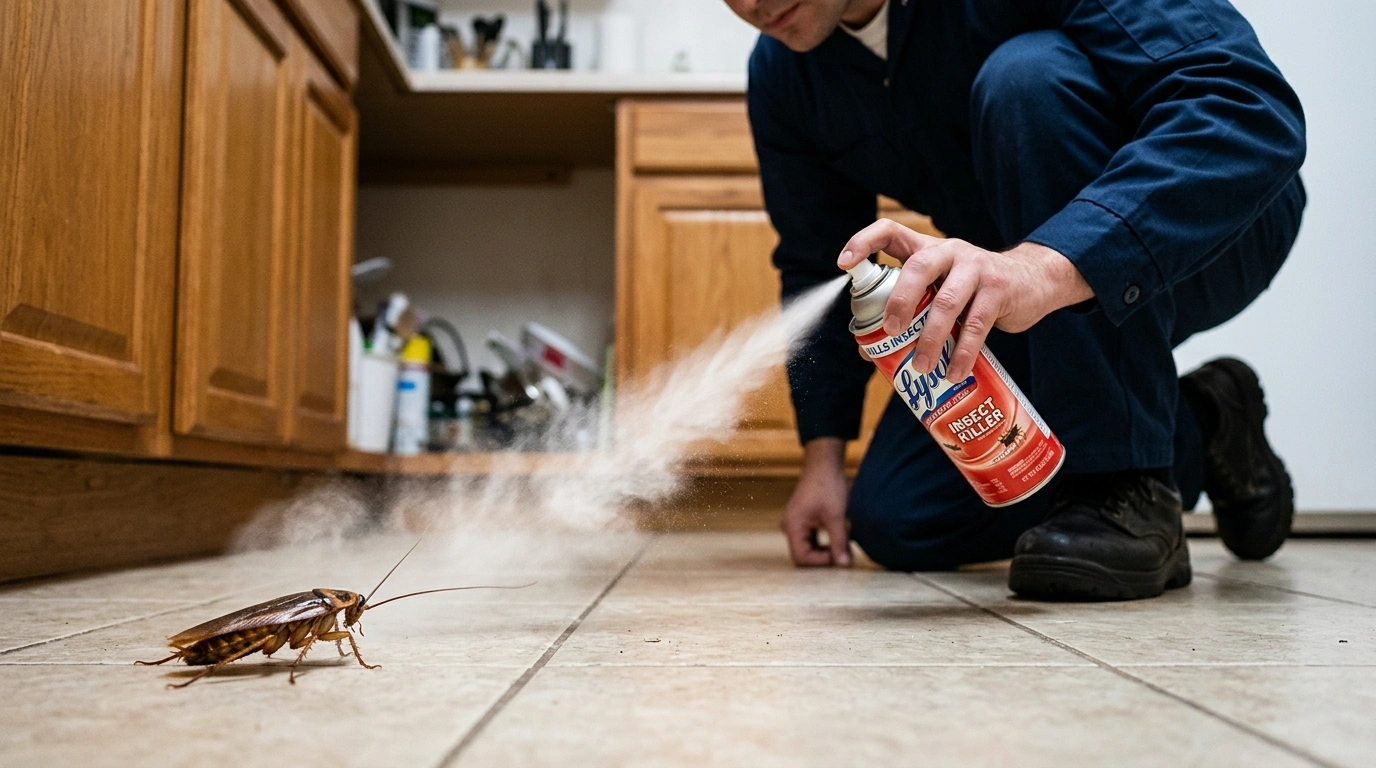
Most people do not read articles about Lysol and roaches until after they have already tried it. The roach appeared where the Lysol was closest, and now they are wondering whether what just happened was useful or whether they wasted thirty seconds and a significant amount of disinfectant on a problem that will look the same tomorrow.
The Short Answer is yes. Lysol kills roaches, but only in very specific situations when the spray lands directly on the roach itself, not near it, not around it, but exactly on it. Miss by two inches and the roach walks away completely unaffected. The spray dries, the smell fades, and nothing about the situation has actually changed.
What kind of problem are you actually dealing with?
Before asking whether Lysol kills roaches, the more useful question is what you are actually looking at when you see one.
A single roach appearing at night in a clean kitchen is almost certainly a scout, which means one insect from a population that has found a route inside and is exploring the territory. The roach you see is scouting for the ones you don’t. Killing it with Lysol removes the scout.
The colony that sent it remains completely operational. A roach appearing during daylight hours is a different signal entirely. Cockroaches avoid light by instinct. When they appear in the day, it usually means the population is inside the walls. Has grown large enough that competition for space and resources at night is pushing individuals out at times they would normally never risk. That is not a Lysol situation. That is a call, someone situation.
How does Lysol kill a roach?
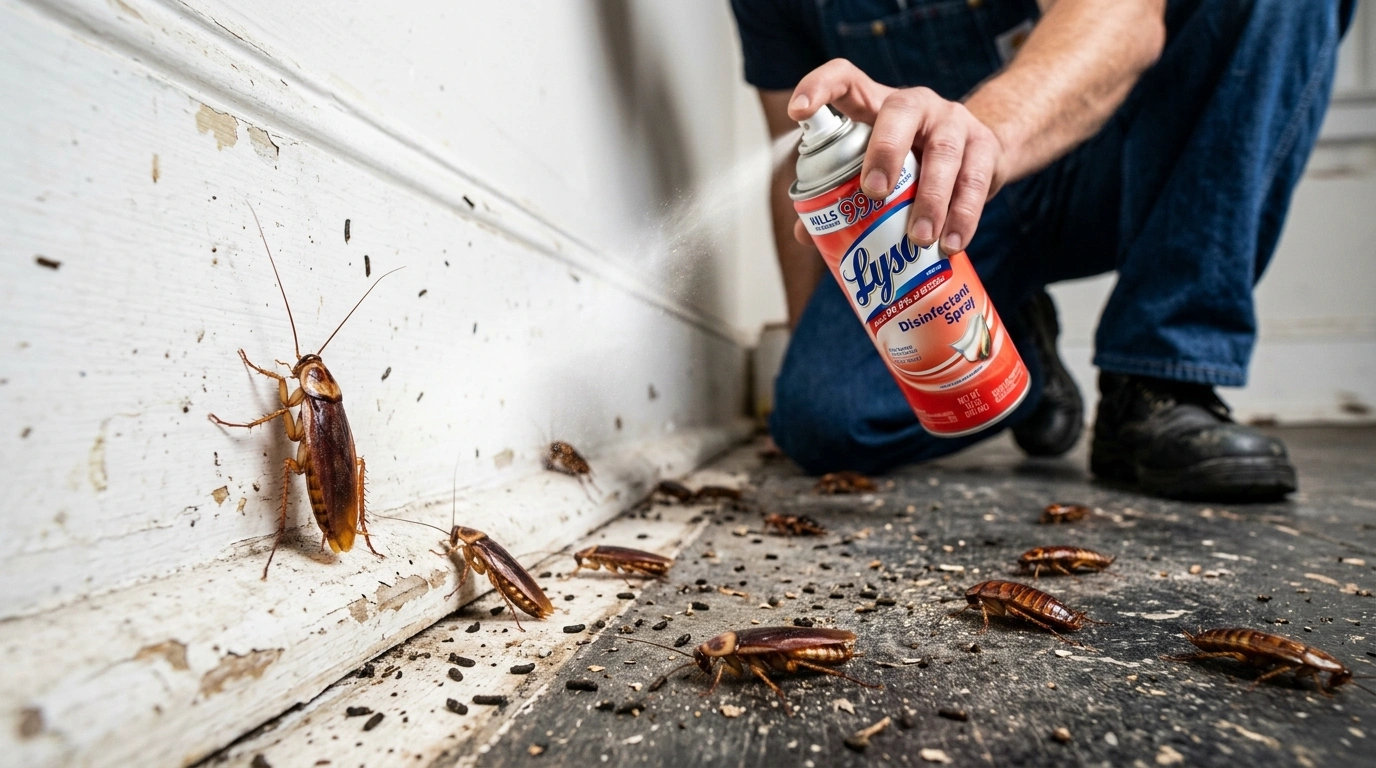
Cockroaches do not breathe through a nose or mouth. Tiny openings along the sides of their body, called spiracles, let them pull in oxygen. Lysol’s active ingredients coat whatever surface they land on, and when that surface happens to be a roach, those spiracles get blocked. The roach cannot breathe. It suffocates. The process isn’t instant; the larger the roaches, the longer it takes.
The Egg Problem
Female cockroaches do not leave their eggs exposed. They seal them inside a hardened protective capsule and deposit it somewhere sheltered before it hatches. That capsule resists chemical penetration in a way that the adult roach body does not.
Spraying Lysol on or near one of these capsules does nothing to what is inside. The eggs develop and hatch regardless. A German cockroach capsule contains between thirty and forty eggs. A female produces multiple capsules across her lifespan. This is the arithmetic that makes killing individual visible roaches with any surface spray an ultimately futile approach to an actual infestation.
Is Lysol Actually dangerous to use this way?
The Lysol label was written for surface disinfection. Using it repeatedly as a pest-control product in enclosed residential spaces creates risks the label does not fully address.
Fumes from Lysol spray in a small, enclosed kitchen, bathroom, or pantry can irritate the respiratory tract, causing coughing, eye irritation, and throat discomfort with short-term exposure. For anyone with asthma or existing respiratory sensitivity, repeated exposure in poorly ventilated spaces is a meaningful health concern, not a minor inconvenience. Children and pets face more risk than adults in the same situation. Both are closer to the floor, where the spray residue settles.
Alternatives to Lysol that actually work
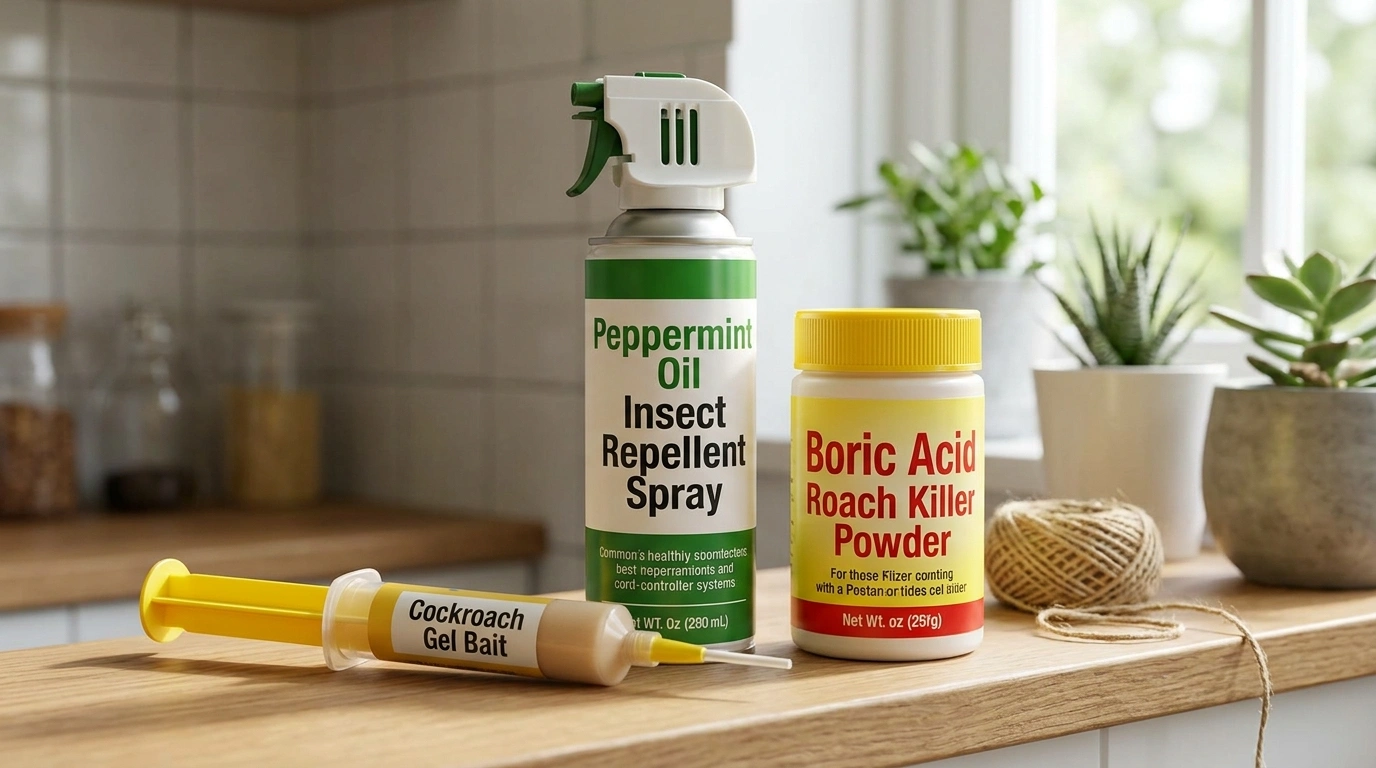
They address the root cause rather than the individual roach.
Gel bait
It is the most effective consumer-level roach control product available. Place small amounts inside cabinet hinges, behind appliances, and along the back of drawers. Roaches eat it, return to the colony, and die there; other roaches consume the dead, spreading the active ingredient through the population without you needing to reach every individual.
Boric Acid
Apply it as a fine dust along baseboards and behind appliances. Roaches walk through it, carry it on their bodies and legs, and it damages their exoskeleton and digestive system over time. Slow but persistent, and unlike Lysol, it does not stop working when it dries.
Peppermint oil spray
Mixed with water and applied around entry points and baseboards acts as a natural deterrent. Roaches navigate through chemical signals, and strong scents disrupt that navigation. Not a solution on its own, but effective as part of a broader approach.
How to use Lysol correctly if you need a temporary fix?
Spray directly and thoroughly from six to eight inches away. The roach needs to be visibly wet, and a light mist from a distance does little. After the roach is dead, wipe the area down with a damp cloth. Roaches leave chemical trails that guide colony members to the same location, and removing those trails breaks the navigation path for the next one.
Keep the area ventilated while spraying. Keep children and pets away until the surface is completely dry. Clean food preparation surfaces thoroughly after any nearby Lysol application.
Two major steps that can help you prevent and tackle roaches.
Seal Entry Points
Every roach inside your home came through a physical gap somewhere/ Behind electrical outlets, around pipes under the sink. Along the baseboard where it meets the floor. Through gaps around plumbing entry points, and via voids between floors in multi-story buildings.
Fix Moisture: The Real Attraction
Roaches need water more urgently than they need food. A slow drip under the sink, condensation around a pipe, or a damp patch behind the washing machine creates the primary condition that sustains a roach population.
When to call a professional?
A roach appearing during daylight hours is a specific signal. Cockroaches are strongly nocturnal as they avoid light and activity. Daytime sightings mean the population is large.
Frequently Asked Questions
Does Lysol kill roaches instantly?
No, it takes several minutes, even with direct contact.
Is Lysol safe to use indoors for roach control?
With precautions, and occasionally yes. Used repeatedly in enclosed spaces without adequate ventilation, it poses real respiratory and surface damage risks, particularly for children and pets.
Can I spray Lysol in roach hiding spots?
You can, but the effect is minimal. Lysol doesn’t penetrate the gaps where roaches live and stops working once it dries.
What is the safest alternative to Lysol for roaches?
Diatomaceous earth and peppermint oil spray are the safest options for households with children and pets.
Does Lysol kill roach eggs?
No, the hardened ootheca casing resists surface chemical penetration. The eggs inside develop normally regardless of surface treatment.